Showing posts with label soy. Show all posts
Showing posts with label soy. Show all posts
Thursday, May 11, 2017
MAKING AN EASY, INEXPENSIVE CRUELTY-FREE AND PALM OIL-FREE VEGAN BUTTER-Y SPREAD

Note: see this new post for the easy updated recipe.
But what do I mean by "cruelty-free"? Read on...

Here's the "but" part-- My "Buttah" is made with oil and cocoa butter (organic and steam-deodorized so that it doesn't smell like chocolate). It only needs a small amount of cocoa butter compared to liquid oil (which makes the fat profile healthier than most spreads). But cocoa butter, and especially organic and fair trade cocoa butter, is getting more and more expensive and the steam-deodorized organic block type that I have purchased in the past is getting hard to find. With our low Canadian dollar, it is really expensive!
I have some of that cocoa butter left and I will use it for "Buttah" to use occasionally in (and on) special baking. (I use oil- sometimes frozen-- and much less than most recipes call for, in my pie crust.) But I wanted a spread for toast or pancakes, and no commercial vegan spread that I can find does not contain palm oil or a derivative or two.
One day it occurred to me that I should try the old method (which I believe originated with Seventh Day Adventist vegans many years ago) of making a vegan mayonnaise by drizzling oil into some soymilk while blending, then adding the appropriate seasoning. Evidently, the natural lecithin in the soymilk enables the oil and soymilk to coagulate into a creamy, spreadable mass. (I had made this in the past, but now use my very lowfat vegan mayo, which can be made with only 1/4 cup oil for a slightly-over-2-cup batch, or with 1/4 cup of certain seeds and/or nuts instead of extracted oil.)
So, I tried making a "butter-y" spread using that method, adjusting the flavoring, of course, and adding a bit of liquid lecithin and vegetable gum powder to make it less apt to separate. It worked! This new spread looked to be a winner-- a.) inexpensive, b.) quick and easy to make, c.) keeps well, and d.) tastes yummy, with a good mouthfeel.
But I wanted to also make a soy-free version for anyone allergic to soy, so I tried it with almond milk and also with a low-fat coconut-based unsweetened creamer, and it didn't work as well, simply because only soymilk contains the lecithin that seems to be the key to thickening this product. However, with slightly more lecithin and vegetable gum (guar or xanthan), which I included to keep it it from separating so easily, it worked out reasonably well. (Update: NON-SOY VARIATION:
Instead of soymilk, use Silk or So Delicious Coconut Creamer (Original), which are both cruelty-free, or you can use a creamy sort of plant-based milk that has a pleasant taste. (Rice milk is too thin). NOTE: Silk and So Delicious brands use cruelty-free coconut products.
The recipe can be found here:
http://veganfeastkitchen.blogspot.com/2019/05/newly-revised-easier-cheaper-cruelty.html
Truth to tell, I prefer not to use coconut oil very often, despite the craze for it, because of the saturated fat. (No, I am not convinced that saturated fat is good for us! See this article and this one, and also this column from vegan RD Ginny Messina.) There are also many concerns with coconut oil producion, of which most people are not aware.
 |
| Photo from this article |
Please read the info in WHY CRUELTY-FREE COCONUT OIL? at the bottom of this post. And see this article for a list of cruelty-free brands of coconut products and other products that contain coconut oil. Silk and So Delicious brands use cruelty-free coconut products.
WHY CRUELTY-FREE COCONUT OIL?
See this article for a list of cruelty-free brands of coconut products and other products that contain coconut oil.
See photographs at this article: "Life in chains: Heartrending pictures of caged Indonesian monkeys being sold to coconut farmers"
See photographs at this article: "Life in chains: Heartrending pictures of caged Indonesian monkeys being sold to coconut farmers"
Published earlier this year, the most comprehensive article I read, Pay Coconuts, Get Monkeys, gives us an idea of what life is like for these monkeys, how valuable they are economically, and how legal loopholes enable trainers and “zoos” to essentially get away with animal abuse and neglect.
Early on in the piece a man called Noi Petchpradab, who has been training macaques to harvest coconuts for thirty years, was interviewed and discusses daily life for these working monkeys: "When they are not working, the animals are chained to tree stumps, which Mr. Noi said is due to their aggressiveness. They are given three daily meals, consisting of rice mixed with Lactasoy milk."
The article also goes on to say:
 |
| Photo from this article |
"Due to their ability to work for long hours, the macaques are capable of collecting 600-1,000 coconuts per day, compared to only 100-200 for humans. On a few occasions, he admitted, the monkeys are so tired they faint.
VIDEO: https://youtu.be/8gWEsNL-RJc
VIDEO: https://youtu.be/8gWEsNL-RJc
This practice will surely continue as long as there is both a market for coconut oil and consumers who are ignorant to the fact that this is even happening. Also, there will always be an economic incentive for people in these areas to use monkeys as performers as long as tourists are willing to spend money to visit them."
More articles:
http://www.crueltyfreekitty.com/news/monkeys-harvesting-coconuts-thailand/
http://www.eatplantsnotanimals.com/animal-related-issues/uk-companies-confirmed-to-not-use-coconuts-picked-by-monkeys/
http://animalplace.org/did-a-monkey-pick-your-coconuts/
https://www.elephantjournal.com/2016/10/is-your-coconut-oil-cruelty-free/
Sincerely,
More articles:
http://www.crueltyfreekitty.com/news/monkeys-harvesting-coconuts-thailand/
http://www.eatplantsnotanimals.com/animal-related-issues/uk-companies-confirmed-to-not-use-coconuts-picked-by-monkeys/
http://animalplace.org/did-a-monkey-pick-your-coconuts/
https://www.elephantjournal.com/2016/10/is-your-coconut-oil-cruelty-free/
 |
| Monkey being sold in Indonesia; photo from this article |
 |
| Tourists photographing monkeys made to perform; photo from article in Bangkok Post |


Monday, May 9, 2011
OKARA MADNESS!
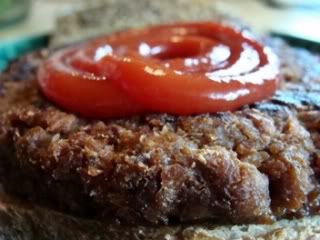 Vegan burgers made with okara
I haven't had much time for experimental or fun cooking lately-- too busy editing my book-- or for much blogging either, for that matter. The last couple of days I've had fun doing some experimenting.
I've been trying to use the okara (soy pulp) from making homemade soymilk more frequently (I make 2 batches in my soy milk maker
 every 4-5 days). After all, it contains high-quality fiber (both soluble and non-soluble), as well as protein, calcium and other nutrients (nutrition facts for okara).
I do make my own parmesan substitute, and I recently devised a yummy, crispy vegan okara waffle recipe. I also developed a delicious vegan okara brownie recipe, but I can't eat those too often! I make my Okara Miso Pate sometimes, to eat as a snack with rye crisp crackers. But, I've been wanting to use it more often in recipes than just composting
 it, so I've been experimenting a little.
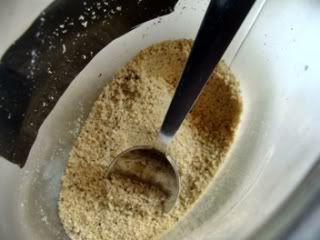 Okara "Parmesan"
 Okara Waffles
 Okara Brownies
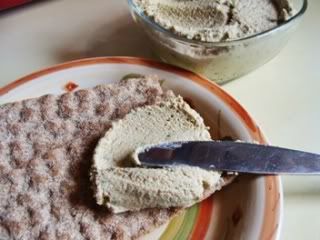 Okara-Miso Pate
This last weekend I used okara in a couple of useful and a delicious recipes and I have a few more I want to try, but I'll just post the two that I'm happy with-- a vegan burger and a vegan "ricotta". I hope that all you home soymilk and tofu-making folks will try them out.
I altered my TVP
 /TSP vegan burger recipe, which had tofu in it as well, to use okara instead of the tofu. It worked perfectly-- and that saves a bit of money, too. This recipe makes 8 medium-large burgers. Steaming cooks the gluten and keeps the burgers moist, but also firms them up nicely when cooled, so they can be browned, grilled or added to recipes later. You can multiply this recipe and freeze it. Crumble the cooked mixture into casseroles, etc.. (It's better to use commercial vegetarian "hamburger crumbles" in sauces.) Or use the patties/burgers instead of cutlets, Salisbury steaks, minute steaks, etc..
 I won't post the actual recipe here, but here is the printable burger recipe and some photos
(PS: check out homemade burger bun recipes here):
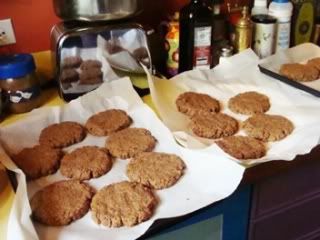 Before steaming
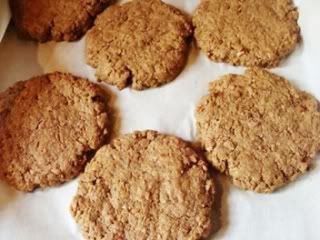 Before steaming
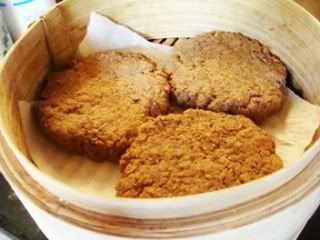 Ready to steam in a Chinese bamboo steamer
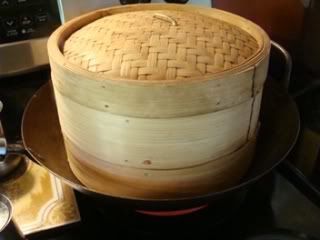
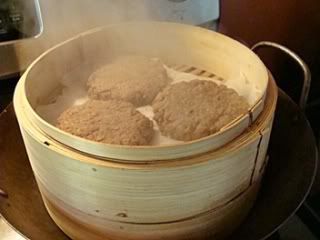 Steaming in a Chinese bamboo steamer
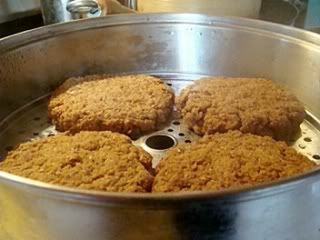 Steamed burgers
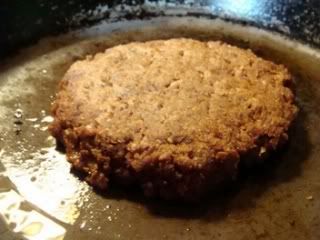 Browning a burger
Finished burger:
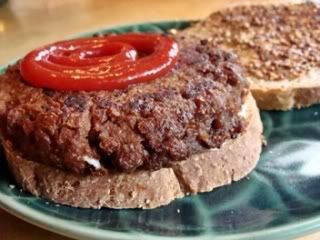

And here's the second recipe, the Okara-Cashew "Ricotta"--

Printable Recipe
See http://veganfeastkitchen.blogspot.ca/2018/01/how-to-replace-expensive-sometimes.html
for alternatives to nuts.
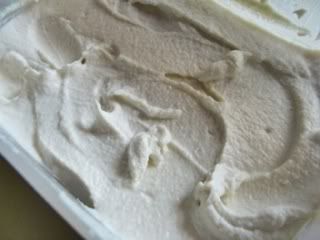
BRYANNA’S OKARA-CASHEW RICOTTA
Makes about 2 2/3 cups
This is an excellent vegan ricotta for all purposes!
2 cups unsqueezed okara
3/4 cup raw cashews
2 tablespoons plus 2 teaspoons lemon juice
1 teaspoon sugar
1/2 teaspoon salt
Cover the cashews with boiling water and let sit for about 15 minutes. Drain them well. Process them in a dry food processor until almost a paste. Loosen with a spatula
 . Add remaining ingredients and process at high speed until as smooth as possible (will never get completely smooth)—this may take 5 minutes or more. Stop and scrape the sides every few minutes. Pack into a container, cover and refrigerate.
until almost a paste. Loosen with a spatula. Add remaining ingredients and process at high speed until as smooth as possible (will never get completely smooth)—this may take 5 minutes or more. Stop and scrape the sides every few minutes. Pack into a container, cover and refrigerate.
Alternatively, process everything together in a high-powered blender such as a Vita-Mix or Blend-Tec
 until almost smooth.
or Blend-Tec until almost smooth.
Nutrition Facts
Nutrition (per serving—1/3 cup): 98.4 calories; 55% calories from fat; 6.5g total fat; 0.0mg cholesterol; 121.8mg sodium; 154.8mg potassium; 8.2g carbohydrates; 0.4g fiber; 1.4g sugar; 7.8g net carbs; 3.3g protein; 2.4 points.
Enjoy!

Subscribe to:
Posts (Atom)