Showing posts with label Field Roast. Show all posts
Showing posts with label Field Roast. Show all posts
Sunday, June 13, 2010
VEGAN SANIYA-- A DELICIOUS LEVANTINE DISH TO ENJOY WITH PITA


We had this for dinner last night and lunch today, and ate with just as much gusto the second time as the first! This is a little-known (at least in North America) dish from the Levant-- Lebanon, Syria, Palestine. I suspect that it is a sort of home-style dish-- it's very easy to make and uses common ingredients.
Saniya (or Sania) is a a type of casserole of spiced ground meat, in this case covered with a tahini-based sauce. The meat part was not hard to “veganize”-- there are many delicious vegan ground meat substitutes around. I had Field Roast Classic Meatloaf in the freezer and used that, but you can use your favorite burger sub. According to Sufian Mustafa, chef and researcher, tahini and yogurt are both used to make "white sauces" in Levantine cooking, so I mixed the two (using silken tofu and lemon juice instead of yogurt) to make a creamy, rich-tasting lower-fat version of this sauce.
The results were delicious and I suspect that I will make this often. I had some whole wheat pita bread and some cooked chickpeas in the freezer, so I made my New, Improved No-Oil Hummous and we had a feast!

BRYANNA'S VEGAN SANIYA-- A DELICIOUS LEVANTINE DISH
Servings: 6
Serve with hummous and pita bread, and a salad (such as Tabouleh, pictured below) or cooked greens.


2 cups Bryanna's Lower-Fat Version of Levantine Taheena Sauce (Recipe below)
(Make the Taheena Sauce before you start the rest of the dish.)
2 tablespoons olive oil
2 large onion, chopped
1 lb. Field Roast Classic Meatloaf, round roughly in a food processor
 (or substitute 4 cups of your favorite vegan hamburger alternative, such as 2 packages of Yves Veggie ground Round)
 salt to taste (I used about 2 pinches with the Field Roast product-- you may need more with other products.) Or a little soy sauce
2 teaspoons Special Spice Mixture (see below), or more to taste
1 cup chopped Italian parsley
8 medium tomatoes, cut into cubes, OR the equivalent in good-quality Italian canned whole tomatoes, well drained and cubed
Special Spice Mixture: (Store leftover spice mix in a jar for next time!)
1 Tbs each of:
tumeric
black pepper
ground cumin
ground coriander or ginger
ground allspice or ginger
NOTE: I made this dish, and calculated the Nutrition Facts, using Field Roast Classic Meatloaf. If you use a different meat sub, the Nutrition Facts may be different. Also, the Field Roast Meatloaf is very well-seasoned, and another hamburger sub may not be so tasty, so you may have to add a little more seasoning. A little Marmite dissolved in hot water adds flavor, for instance. Taste as you go!
Preheat the oven to 350 degrees F.
Heat the olive oil in a large nonstick skillet
 . Add the chopped onion and saute over medium high heat until it starts to soften. Add the ground Field Roast Meatloaf, or other hamburger substitute of your choice, and 2 teaspoons of the Special Spice Mixture. Stir-fry over high heat for a few minutes.
 Add the parsley and salt to taste. Mix well and spread the mixture evenly into a 9x13" baking pan
 which has been oiled with olive oil.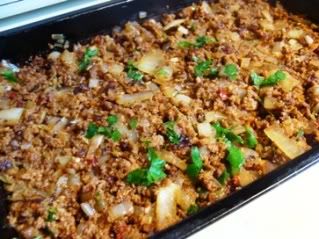
Distribute the tomato cubes evenly over the top.
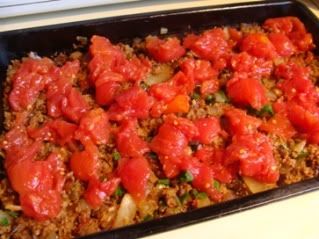
Spread the Taheena Sauce evenly over the top.
Bake for about 20-30 minutes. Serve hot with (whole wheat) pita bread, and hummous. A salad or some sauteed greens goes well with this meal.
Nutrition Facts
Nutrition (per serving): 340.8 calories; 54% calories from fat; 21.3g total fat; 0.0mg cholesterol; 572.0mg sodium; 690.4mg potassium; 23.3g carbohydrates; 6.5g fiber; 7.7g sugar; 16.8g net carbs; 18.6g protein; 7.8 points.
BRYANNA'S LOWER-FAT VERSION OF LEVANTINE TAHEENA SAUCE
Servings: 22
Yield: 2 3/4 cups
(There will be 3/4 cup or so left over-- it's delicious on many things, so it won't go to waste!)
This delicious and ubiquitous sauce, used in Lebanon, Syria, Jordan, Israel, and Palestine, is delicious on vegan "meats", grilled or fried eggplant and zucchini, falafel and whatever else sounds good!
1 box (12.3 oz.) extra-firm SILKEN tofu
10 Tbs tahini
10 Tbs fresh lemon juice
2 tablespoons water
6 cloves garlic, peeled
2 Tbs chopped fresh mint
1 1/4 tsp salt
1/2 tsp sugar
Mix all of the ingredients in a food processor
 or blender
 until very smooth. Cover and refrigerate until use, then bring to room temperature. If it seems too thick, add a little more water.
 Nutrition Facts (for sauce only)
Nutrition (per 2 tablespoon serving): 51.0 calories; 59% calories from fat; 3.6g total fat; 0.0mg cholesterol; 122.1mg sodium; 65.3mg potassium; 3.1g carbohydrates; 0.7g fiber; 0.4g sugar; 2.4g net carbs; 2.5g protein; 1.2 points.

Enjoy!



Saturday, May 1, 2010
FOODIE TRIP TO PORTLAND, PART 3: THE FIELD ROAST BOOTH AT THE CULINARY EXPO
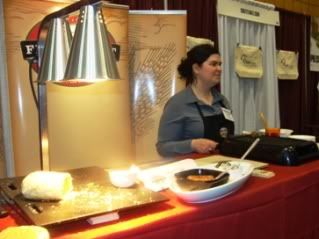
Field Roast Marketing Manager Jennifer Hryciw at the IACP Culinary Expo
On Friday, April 23rd, the IACP hosted the Culinary Expo and Book Signing at the Oregon Convention Center. I was there to help Jennifer and her helper, Mel, serve samples and talk to people about Field Roast. (I am writing a book with the owner, David lee.) If you don't know about Field Roast, here's a great article with a little video from the Seattle Times.
This was the first time Field Roast has exhibited at a non-vegetarian venue, and all of the food demos on the main stage were featuring beef, so we weren't sure what to expect. But I think that there was a good response! We certainly had lots of takers for the samples, and lots of surprised but pleased reactions.
I hope that our presence there went some way to showing omnivores that vegetarian meats (as David terms his products) can stand on their own as delicious protein foods, and not merely as "substitutes". David explains in the video mentioned above that "meat" originally meant "solid food". We call the edible part of nuts "nutmeat", after all. So, his product is "grain meat" or "vegetarian meat". He writes on his blog: "Our slogan written on every package using Chinese characters is “Flesh of the Earth” ." [Similarly, the Chinese call soy "the meat of the fields".]
We were handing out bumper stickers that read "Meat? Yes. Vegetarian? Yes.", and refrigerator magnets that read "Grain meat is not an oxymoron. It is, in fact, delicious." or "We are proof that vegetarians eat meat." He is adamant that his product is not "seitan", even though the main ingredient of both is gluten, the protein of wheat. And he's right, because "seitan", though used to refer to a number of gluten products, was originally a simple chunk of wheat gluten dough simmered in a broth of water and soy sauce, with perhaps some garlic or ginger. It isn't even a traditional Japanese product, but the invention of macrobiotic pioneers.
(A funny story-- a group of people came over for samples and one of them remarked to Jennifer that Field Roast must have a close relationship with the Washington State Beef Commission! She saw the "meat" word, but the "vegetarian" part didn't register! She was one of the representatives from the Oregon Beef Council, which sponsored the food demos! I am mortified to say that I had to exit the scene quickly before I heard Jennifer's answer, because I was about to burst out laughing! I'm sure Jennifer handled it with her usual aplomb!)
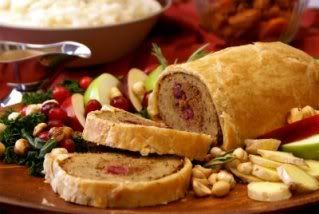
We were handing out samples of the elegant and delicious Stuffed Hazelnut Cranberry Roast en Croute (which is available now through retail outlets seasonally:
And all three yummy varieties of Field Roast sausages:
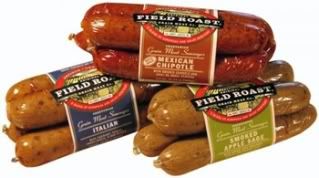
And two outstanding Food Service products which will be on the retail market in the near future, the unbelievably sumptuous Field Roast White Truffle Country Pâté:
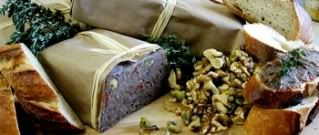
and the very more-ish Field Roast Chao Cheese (their only soy product):
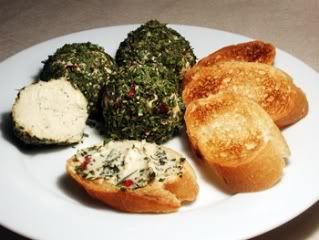

Yours Truly offering samples of the Pâté and Chao Cheese (Photo by Fran Costigan)
And all three yummy varieties of Field Roast sausages:
And two outstanding Food Service products which will be on the retail market in the near future, the unbelievably sumptuous Field Roast White Truffle Country Pâté:
and the very more-ish Field Roast Chao Cheese (their only soy product):
Yours Truly offering samples of the Pâté and Chao Cheese (Photo by Fran Costigan)
(For more information about these products, check out the Field Roast blog, or their products page (click on the link for each product for a link to a Product Sheet).
Unfortunately, I didn't have time to really look at the other booths or take more pictures!
Tomorrow's blog post: Dinner at Blossoming Lotus
Cheers!
Sunday, June 28, 2009
FIELD ROAST COOKBOOK STILL IN PROGRESS-- LATEST SUCCESSFUL EXPERIMENTS
The Field Roast cookbook I have been working on with the owner/founder, David Lee, from Seattle, is taking longer than expected, but it's 's coming along! This week I have not had alot of time for cooking or writing recipes (painting kitchen cupboards!), so here are some "teaser" pictures of two of my latest Field Roast Grain Meatloaves, a South African version and an Indian-style version:
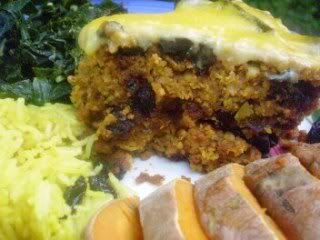
This is my Field Roast Bobotie, a fruity, spicy South African-style grain meatloaf, which turned out really well. I have been veganizing this recipe for years, as my stepsons' late mother was from South Africa. The origins of Bobotie (you can listen to the pronunciation of this word here) can be traced back to the influence of the Cape Malay people on South African culture.
A little history about this dish: "The first group of Malaysian state prisoners landed on the shores of South Africa from Java and the neighboring Indonesian islands in the late 1600's. Many more followed in the years 1727 until 1749. Not only did this proud and attractive people bring with them the Moslem faith and fine architecture, they also brought with them a unique cookery style, introducing exciting mixtures of pungent spices that has had a heady influence on traditional South African cuisine. Indeed, the Malay-Portuguese words such as bobotie (a curried ground beef and egg custard dish), sosatie (kebabs marinated in a curry mixture) and bredie (slowly cooked stews rich in meat, tomatoes and spices) are integral in our cookery vocabulary." Source
Earlier this week I made an Indian-style version of the Field Roast Grain Meatloaf:
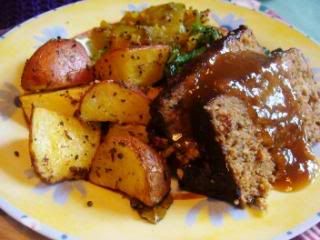
I served it with spicy Indian-style roasted red potatoes, Indian-style braised kubocha squash, and braised greens with garlic and chile. I glazed the loaf with a spicy tamarind-ketchup sauce, and served it with mango and ginger chutney.
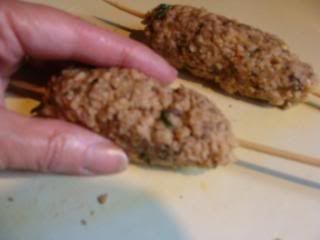
Forming the koftas on bamboo skewers
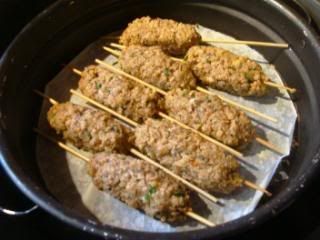
The koftas before steaming
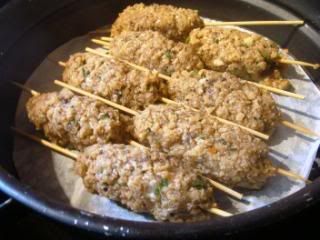
The koftas after steaming
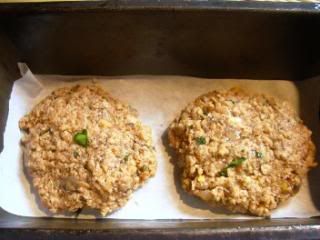
The patties before steaming
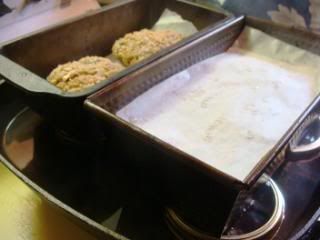
Steaming the grain meatloaf and the patties in an electric skillet (not shown is the dome lid)
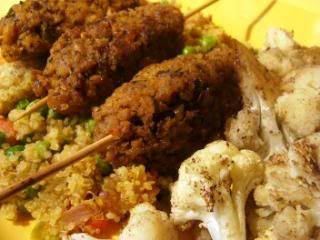
The browned kofta kebabs on spicy quinoa and bulgur with peas, with masala cauliflower.
I promise you that this book will be worth the wait!!
PS: see more pictures of recipes that will be in the book (including grain meat loaves and roasts, sausages, cutlets, grain meatballs) at the following links:
(scroll way down to the bottom of this post to see the photo of the rolled, stuffed grain meatloaf)
All the best,
Thursday, May 7, 2009
FARINATA OR FAINÁ (ITALIAN CHICKPEA PANCAKE), TOFU YOGURT, AND OTHER THINGS WE'VE EATEN LATELY
Here are some pics of things we've been eating lately. Below the photos are a couple of recipes and details about them.
A "Baked Kibbeh" or Middle Eastern-style "Grain Meatloaf", topped with sliced fresh tomatoes and sliced onions, a little olive oil, salt and pepper before baking (UPDATE: You can use this recipe for the base of this dish)
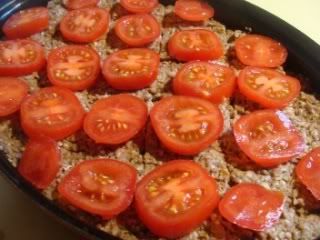
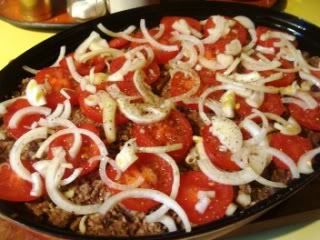
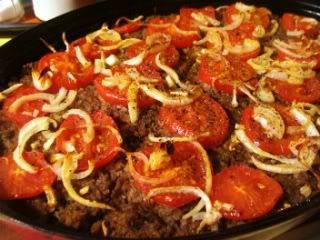
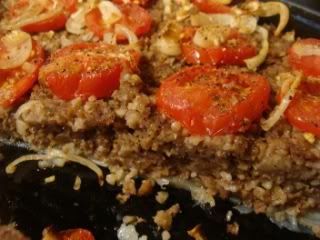
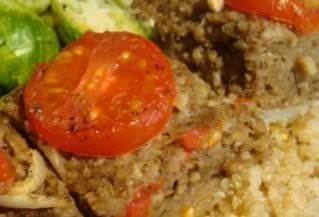
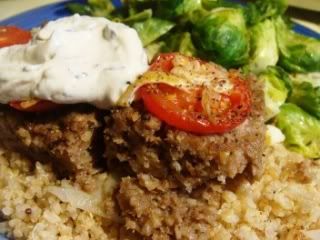
Serve with Creamy Tofu Tahini/Mint Sauce.
Making miso powder for my New, Improved Okara Parmesan (the directions for making the miso powder are in the same post):
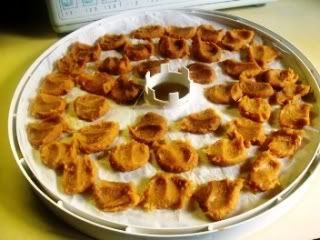
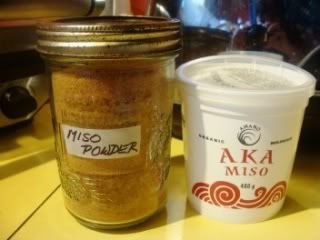
Experimenting with a vegan "tortillita" (Spanish chickpea pancake usually made with seafood--I used vegan "shrimp"). It wasn't as tasty as I would have liked, perhaps because I wasn't using much oil. I'm still working on this!
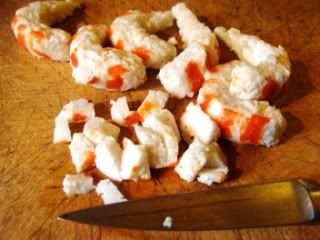
Vegan "shrimp" from an Asian grocery
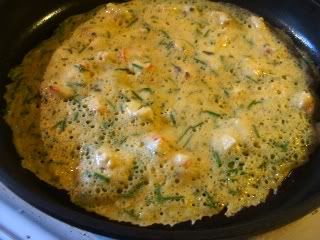
The "tortillita" before turning over.
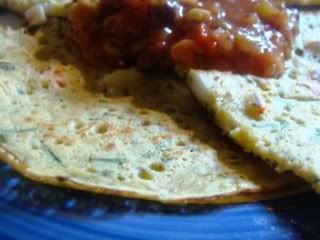
A simple Cantonese "shrimp" stirfry with the vegan "shrimp":
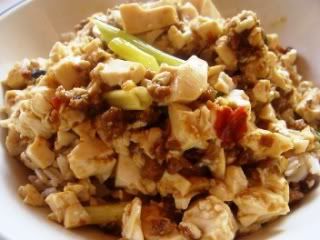
A Japanese version of a Chinese recipe-- Mapo Doufu:
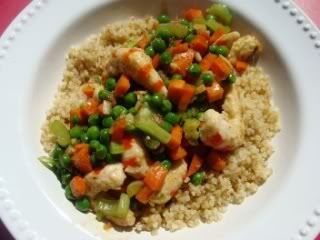
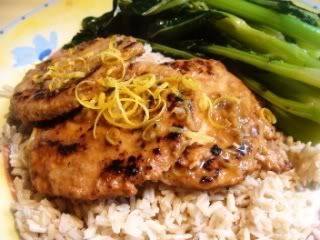
Chinese Lemon "Chicken" Cutlets with gai lan (Chinese broccoli) (the cutlets are the type they serve in Buddhist vegetarian restaurants-- we found them at an Asian grocery store):
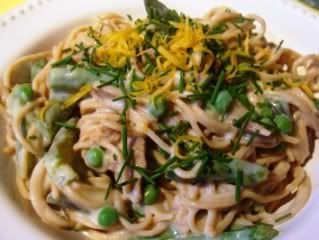
Pasta with Lemon, Asparagus, Peas and Vegan "Ham" (UPDATE: recipe here):
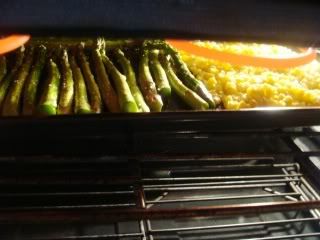
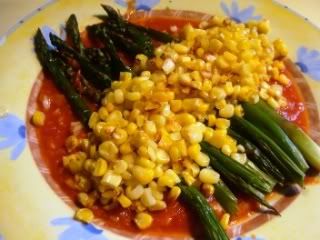
A grilled asparagus and corn dish with a tomato-curry sauce, adapted from a recipe from Vij's cookbook (**I considerably reduced the fat** and it was still yummy!):
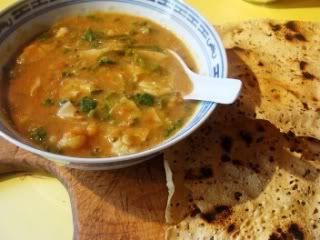
Dal Soup with vegetables in it (made from leftover Red Lentil Dal from my "Fiber for Life Cookbook") with poppadoms toasted on a dry cast iron skillet instead of frying them in oil:
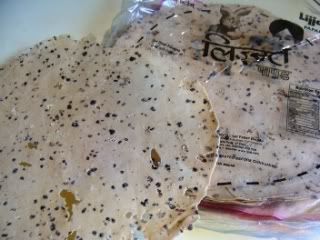
A poppadom (or papad)is a South Indian wafer made from lentil flour. They are inexpensive and take only seconds to dry-toast or grill or fry. Very crunchy and yummy!
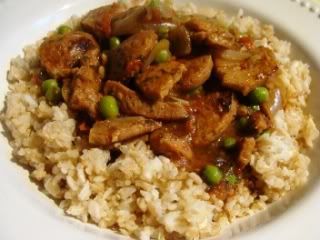
A Middle Eastern-style stew with peas and tomatoes, made with textured soy protein chunks:
NOW, THOSE RECIPES:
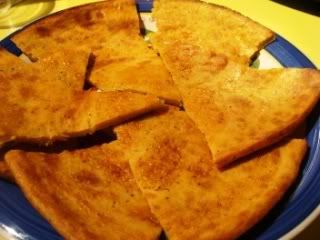
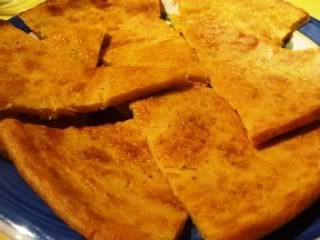
Freshly-baked chickpea flour Farinata or Fainâ
I've been fooling around with chickpea flour alot these days, because it's a legume flour which we can eat on the WW Core plan without having to count extra points for it! One of my favorite chickpea flour dishes is Farinata, a dish from the region of Italy where my fraternal grandmother's family originated.
My father called it Fainâ, and for years I thought that was because his mother’s family was originally from the Genoa region of Italy. But I have just discovered that it is called Fainá in South America. The dish is popular in Uruguay and Argentina, and, apparently, also in Peru, where my father was born. (There are a surprising number of Italians in those countries, and many people from the Genoa area immigrated to South America in the 1800's.) Fainâ or Fainá, the name undoubtedly resulted from a slurring of the more general Italian term for the dish, Farinata. Which is odd, because “farina” actually means white flour in Italian, not chickpea flour. Scholars guess that this was a reflection of the dish’s origins among the poorest population—to these peasants, who never saw white flour, all flour was chickpea flour. (They had the last laugh, though, because high-protein chickpea flour is a lot more nutritious than white flour!)
The dish migrated to Tuscany, where it is called Cecina (from the Italian for chickpea, ceci) or “Calda, Calda” (meaning "hot, hot"); to Livorno (Torta di Ceci); across the border to Monaco and Nice, in France, where it is called Socca; to Sardinia (la fainé genovese); and to Gibraltar (Calentita).
So what is this mysterious “pancake”? It’s a delicious and nourishing snack food, a flatbread, really. In Nice, their version, Socca, is a street food, cooked huge copper pans over wood burners (rather than baked), pieces eaten out of hand like French fries in a cone of paper with lots of pepper. In Italy, it is eaten at home, with a knife and fork, or at a bar. In Genoa, there are farinata bakeries everywhere. In Argentina, they eat it on pizza! Both Italians and Niçois will tell you that it should not be made at home and it won’t taste the same if it’s not made over a wood-fired stove or in a wood-fired oven, but, trust me, a very reasonable approximation can be made and enjoyed at home!
It’s basically a chickpea flour and water batter with some salt, olive oil, and sometimes garlic and fresh herbs. Some people make it thinner than others— there are many versions. Farinata is sometimes eaten with sliced onions or artichokes. Modern chefs are now using it as a base for imaginative toppings, even salads.
It couldn’t be simpler, and yet it will raise your status with knowledgeable “foodies”, if that is what gives you a thrill. It’s one of those ancient, nourishing peasant dishes (like polenta) that one now encounters in trendy, expensive city restaurants, perhaps to be nibbled with wine. But that’s okay— it can’t hurt for more people to learn to love this dish, because it’s delicious, nutritious, inexpensive and very easy to make at home, and, besides, we grow a lot of chickpeas in Canada (in southern Alberta and Saskatchewan, mostly).
I hope I’ve intrigued you sufficiently to try out my version of it. Whenever I serve it to guests they are mystified, but they love it! We eat it hot or cold for a snack. (On the WW Core Plan, 1/6th of the "the 'pancake' uses1 teaspoon of your 2-teaspoon daily oil allowance; or, if you've used that up, you use up 1 point-- not bad for alot of satisfaction!)
UPDATE: Here's another great way to serve farinata-- farinata with toppings!

(Chickpea flour, by the way, can be purchased in Indian food stores under the name “besan” or “chana flour”, as well as in health food stores, and in the Indian food section of some large supermarkets.)
Printable Recipe
BRYANNA’S FARINATA (FAINÁ) (ITALIAN CHICKPEA FLOUR "PANCAKE")
Serves 6
This from my book Nonna's Italian Kitchen.
This is a thin version, which I prefer. You can sprinkle the top with chopped garlic and rosemary, thyme or sage before baking, if you like. Ligurians, who eat it with a knife and fork, sometimes also top it with thinly sliced onions or green onions, or even slices of baby artichoke. I like the leftovers cold, too. (UPDATE: Here's another great way to serve farinata.)
1 1/2 cups chickpea flour or plain besan
1 1/2 cups water
3/4 tsp. salt
freshly-ground black pepper to taste
OPTIONAL: 2 teaspoons crushed garlic
2 tablespoons extra-virgin olive oil
2 hours before cooking, mix the water and chickpea flour in a medium bowl, cover, and let stand in a cool place for 2 hours.
Preheat the oven to 475° F (450° with convection). Coat a 14" pizza pan (or an 11 x 15” rimmed cookie sheet) with 1 tablespoon of the olive oil.
Stir the salt and pepper (and optional garlic, if using) into the batter, which should be like a pancake batter (add water if too thick). Pour the batter into the pan and drizzle with the remaining oil. (If you like, sprinkle with some of the items suggested in the text, above.)
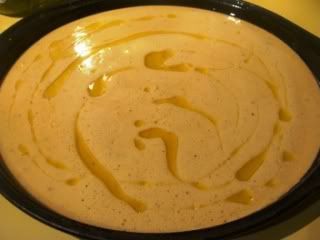
Bake for 10 minutes, then place under the broiler for a few minutes to brown the top. Grind more pepper on top, if you wish, and cut into wedges to serve. Serve hot.
Nutrition Facts
Nutrition (per serving): 128.8 calories; 41% calories from fat; 6.0g total fat; 0.0mg cholesterol; 251.0mg sodium; 194.6mg potassium; 13.3g carbohydrates; 2.5g fiber; 2.5g sugar; 10.8g net carbs; 5.1g protein; 2.6 points.
THE SECOND RECIPE:
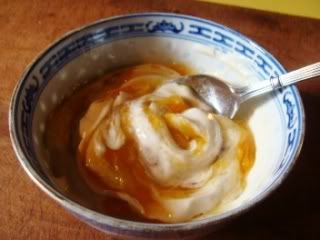
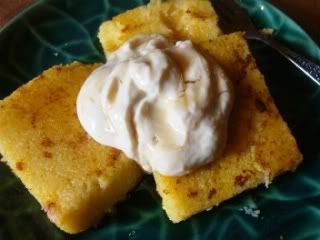
This is nothing very earth-shaking, but I had a craving this morning for a really rich, Greek or Bulgarian-style whole milk yogurt! I like soy yogurt, but it's more like a low-fat or no-fat yogurt. So I made a recipe that I generally use as a yogurt substitute in Greek and Middle Eastern cooking, just because it tastes so rich and is so stable when cooked. The recipe is for Tofu Yogurt, made with silken tofu. It is is almost all of my cookbooks. I made a little change, though. I had used the same recipe last night for the "Yogurt/Mint sauce" to go with the "Grain meatloaf" pictured above, and I put just a little bit of tahini in it. It tasted to rich, and yet you could not detect the tahini taste, so I decided to add some tahini to the yogurt recipe for eating. It is delicious! I just added a spoonful of low-sugar jam to it and ate some that way, and used the rest as a sauce on some polenta squares browned in a non-stick pan. Yummy!
I know that silken tofu can be expensive, so I won't eat it this way often, but it was sure a treat! (I buy silken tofu by the case from a local food co-op and save about $1 a box, though.)
Printable Recipe
BRYANNA'S TOFU YOGURT, RICH "BULGARIAN-STYLE"
Servings: 6
Yield: 1 3/4 Cups
Silken tofu makes a smooth, rich-tasting mixture which can be used anywhere you would normally use yogurt, including cooking. The little bit of tahini adds richness and edge, but you can use a neutral oil, if you prefer..
If you like, you can add some dairy-free acidopholis powder.
1 box (12.3 oz.) extra-firm SILKEN tofu
1/4 cup fresh or organic bottled lemon juice
1 tablespoon tahini (or neutral cooking oil)
1/2 tsp unbleached organic sugar (UPDATE: If you like it a little sweeter, use up to 2 tablespoons agave nectar)
scant 1/4 tsp salt
Process all of the ingredients in a blender until VERY smooth. Keep in a covered container in the refrigerator for up to a week.
For a snack or topping for fruit, sweeten with Grade A light maple syrup, fruit-sweetened jam, agave nectar, fruit juice concentrate, and/or fruit liqueur.
Nutrition Facts
Nutrition (per generous 1/4 cup): 47.7 calories; 42% calories from fat; 2.3g total fat; 0.0mg cholesterol; 116.8mg sodium; 100.6mg potassium; 2.2g carbohydrates; 0.3g fiber; 0.9g sugar; 1.9g net carbs; 4.7g protein; 1.1 points.
Enjoy!
Subscribe to:
Posts (Atom)