Monday, February 22, 2010
MY VEGAN POTSTICKER RECIPE
 Thanks so much for all the good wishes and condolences!

UPDATE (Feb 2011): There is a new mushroom gyoza filling at this post!
I promised you a recipe or two from our Lunar New Year feast, so here's the all-time favorite one.
Guo Tie are called "potstickers" because of the unique cooking method-- the juicy dumplings fry and steam at the same time, leaving them delicately soft on top and crispy on the bottom. They are so popular in Japan that they have been assimilated into Japanese cuisine, under the name "gyoza". I've seldom met anyone who could stop eating them unless the plate was taken away! For this reason, I'm giving you a large recipe. If you can't use it all at once, they freeze well. You might as well make a large batch while you are putting out the effort!
As long as the filling is not too wet, the dumplings can be made in the morning, covered with plastic wrap and refrigerated until time to cook them. Or they can be frozen (directions below) and a few cooked whenever you want them.
This is my vegetarian version of the traditional pork-and-vegetable-stuffed potstickers, using either textured soy protein, ground seitan, or frozen tofu. Bob's Red Mill Organic TSP (available at amazon.com and many other vendors) is: "...made from identity-preserved, non-GMO soybeans. It's made by removing the soybean oil in an all natural water process, then cooking, extruding and drying ground soy."
In my cookbook, I have a recipe for homemade dumpling wrappers, which are actually very easy to make, but a bit time-consuming. (There is also an alternative filling recipe.) This time, I used the commercial ROUND egg-free dumpling wrappers (sometimes called "gyoza wrappers"). (The square wuntun wrappers contain egg.) The wrappers are often available frozen or in the produce section of large supermarkets, where egg roll and wonton wrappers are found. A 1 lb. package may contain from 50 to 75, depending on their thickness, so buy two packages for this recipe (extras can be frozen). If they are frozen, thaw them out completely before filling.
They come in a package something like this:

I also used a handy little gadget for filling and sealing the dumplings, instead of doing it by hand (hand-filling instructions are in my book)-- it's called a potsticker press. It's a little hinged plastic gadget (usually white, but he one I have is purple!) that's available in Asian and gourmet stores, usually for under $5. Amazon has them
 , too. (I would advise against getting a set of different-sized dumpling presses. I bought one, and the small press, which is for potstickers, doesn't seal properly.)
(If you don't have a potsticker press yet, and you just have to make these right now, here are 2 videos showing how to seal them by hand: this one gives you a close-up lesson on how to pleat and seal them; this one shows how fast you can do it once you know how!)
These are really very easy to make, and fun to make with friends!

It pleats and seals the dough for you with just a little pressure on the handles. With this handy gizmo, even a novice cook can make perfect potstickers and other dumplings.

Printable Recipe
BRYANNA’S BEIJING-STYLE VEGAN GUO TIE (OR "POTSTICKERS" OR GYOZA) (SAVORY STEAM-FRIED DUMPLINGS, WITH STEAMED
VARIATION)
Makes 80 dumplings
This recipe is from my book “Authentic Chinese Cuisine for the Contemporary Kitchen”
 . (Reviews)
INGREDIENTS:
DUMPLING WRAPPERS: Use 80 round commercial egg-free "gyoza" or steamed dumpling wrappers (see notes in text above-- the square wuntun wrappers contain egg.)
FILLING:
2 2/3 c. dry textured soy protein granule
 s,reconstituted with 2 c. plus 2 T. boiling water for 5 minutes (Bob's Red Mill Organic TSP, available at amazon.com is: "...made from identity-preserved, non-GMO
soybeans. It's made by removing the soybean oil in an all natural water
process, then cooking, extruding and drying ground soy.")
Alternatives:
OR about 3 2/3 c. crumbled, squeezed frozen tofu
OR about 3 2/3 c. ground plain boiled un-seasoned gluten
2 large carrots, grated OR 2 c. fresh bean sprouts (or 1 c. each) 1 c. minced green onions
4 large cloves garlic, minced or crushed
4 tsp. grated fresh ginger
1/4 c. light soy sauce
1 tsp. salt
FOR STEAM-FRYING:
3 1/2 T. oil (such as peanut or canola) PLUS 1 T. roasted sesame oil
 , mixed
BRYANNA’S SPICY DIPPING SAUCE Makes about 3/4 c.
1/2 c. light soy sauce
1/4 c. rice, cider or white wine vinegar
2 tsp. roasted sesame oil
2 tsp. grated fresh ginger
1 tsp. brown sugar
OPTIONAL: pinch dried red chili flakes
 or 1/8 tsp. chili garlic paste

Mix all of the ingredients in a bowl. Can be made ahead of time.
DIRECTIONS: Make the various components of the recipes in the order given.
MAKE THE DIPPING SAUCE and set aside.
TO MAKE THE FILLING, mix all of the ingredients together well, preferably in a food processor. Before filling the dumplings, drain off any excess liquid from the Filling.
TO FILL USING A POTSTICKER PRESS: center a wrapper on the opened-up press. (If the wrapper is not perfectly round and does not fit to the edge of the press, you can gently stretch the wrapper with dry hands.)

Moisten the wrapper edge with water, using a small brush, and place about 2 teaspoons of Filling in the center of each circle.

Close the press, using pressure to seal the wrapper.


Pop the dumpling out and start again.

Arrange the dumplings on floured cookie sheets and cover with clean tea towels as you work. NOTE: It’s important to keep your hands and the potsticker press dry, so keep a clean cloth nearby to wipe with.

TO FREEZE THE UNCOOKED DUMPLINGS place them on floured cookie sheets in the freezer until frozen solid. Loosen the frozen dumplings by banging the pan on the table. Place them in plastic bags or rigid freezer containers and fasten airtight before returning to the freezer. Freeze up to a month. Cook them about a minute longer than unfrozen ones.
NOW, TO STEAM-FRY THE DUMPLINGS:
A 10" skillet will hold about 15 dumplings, a 12" skillet about 18, and a 14" skillet about 30 dumplings, but with a skillet this large you will probably have to move the outer ones to the middle and vice versa for even browning. If you are cooking all of the dumplings at once, you will need several skillets, or you'll have to cook in batches. Use heavy skillets, such as cast iron.
Heat the skillet(s) over high heat until very hot. Add 1 T. of the mixed oil to the 10" skillet (1 and 1/2 T. to the 12" skillet, or 2 T. to the 14" skillet). Swirl the oil around and lower the heat to medium-high. Remove the pan(s) from the heat while you place the dumplings in the pans(s), not quite touching, pleated side up. Return the pan(s) to the heat.

When the bottoms of the dumplings begin to brown-- about 1 minute-- add about 1/3 c. of hot water to the pan (about 1/2 c. to the 12", 2/3 c. to the 14"). Cover and cook until the water evaporates-- about 5 minutes. Cook 2-3 minutes more, until a dark-golden-brown crust forms on the bottom, the dumpling dough is translucent on top, and they start to puff up.

Remove from the pan and serve them browned-side-up with a little bowl of dipping sauce for each diner.
Clean each skillet out thoroughly before cooking another batch in it.
TO OVEN STEAM-FRY THE DUMPLINGS, (This is an option if you’re making lots at once and are busy with other things-- not quite as crispy, but still good!)
Preheat the oven to 400 degrees F (Make sure that your oven is hot enough-- use an oven thermometer, if possible) and oil two 9x13" baking pans with a bit of roasted sesame oil. Place the dumplings in rows, pleated-side-up, barely touching but in a single layer. Pour 1 c. of hot vegetarian broth into each pan. Cover the pans tightly with foil. Bake for 20 minutes near the bottom of the oven, or until the wrappers are tender and the bottoms are browned. Serve them hot, giving each guest a little bowl of Dipping Sauce.
VARIATION: CHENG JIAO (BEIJING-STYLE STEAMED DUMPLINGS)
If you use bamboo steamers, line them with a couple of layers of cheesecloth
 , or place a little square of foil under each dumpling, or use lettuce leaves as liners. Place the dumplings 1/2" apart. You can stack two steamers up at once. Steam over high heat 8 minutes and serve immediately. Or you can arrange the dumplings on an oiled plate and steam in a wok or other pot over medium-high heat for 8 minutes.
Steamed dumplings are usually served with a simple dipping sauce of rice vinegar with shredded fresh ginger added.
Enjoy!



Saturday, February 20, 2010
SINÉAD: MEMORIAM FOR A BELOVED CAT

Sinéad smelling the roses in her younger days. (Photo by my good friend Fireweed. See also here and here)
Sinéad (yes, named after Sinéad O'Connor!) was 20 years old and the senior cat (read "Queen", literally!) in our house. She survived a number of our companion cats. She chose us to live with, and she was quirky and affectionate cat. (She loved spaghetti sauce and was known to sneak vegetables out of the sink or off the table a few times!) We will miss her greatly, but we're so grateful to have had her gracing our house with her elegance and attitude for so many years!
She is, as they say, survived by her cat companions, Ringo and Isis (the big tortoiseshell who adopted us a couple of months ago). She was buried next to our little Tina (Ringo's sister):

Tina regarding me from a file box on my desk
and my stepson Sean's dog Huan:

in the woods behind our house, under what I call "the Four Guardians"-- four trees growing in a semi-circle in 2 pairs.


DH took this lovely photo of Sinéad about 18 months ago.
All the best,
Thursday, February 18, 2010
OUR VEGAN LUNAR NEW YEAR FEAST
Some photos from our feast last Saturday, at which a great time was had by all 10 of us, and we all ate far too much!


Photo by Fireweed
 ) in the foreground

Photo by Fireweed
My Szechuan Tofu (doufu)

Photo by Fireweed
Pelka's silky black bean rice noodles

Pelka's silky black bean rice noodles
Photo by Fireweed
My Buddha's "Chicken" (made with yuba/beancurd sheets)

Photo by Fireweed
Sarah's grilled eggplant with miso-- delicious!

Photo by Fireweed
Ellen's yummy cashew rice

Photo by Fireweed
Fireweed's delectable baked, rolled yuba (beancurd sheets) with lemon sauce

My steamed dumplings (they were supposed to be fried, like gyoza, but I made so many that I just oven-steamed them in broth in large shallow pans covered with foil for 20 minutes) served with a spicy dip

My steamed dumplings (they were supposed to be fried, like gyoza, but I made so many that I just oven-steamed them in broth in large shallow pans covered with foil for 20 minutes) served with a spicy dip
My "Lion's Head"-- braised cabbage with "meatballs" (in this case I made a version of the "meatballs" I have developed for the Field Roast cookbook)
(My recipes, except for the cake, of course, were all from my vegan Chinese cookbook. You can see some reviews here.)

. You can see some reviews here.)Last, but not least, a cake I made for Pelka, the "birthday girl"-- a rather over-the top 2-layer, heart-shaped chocolate cake with orange/chocolate icing (topped with candied ginger), a filling of orange marmalade and chocolate mousse, and decorated with orange/ginger dark chocolate truffles.
**I'll post a few of the recipes in a day or so!**
Happy Lunar New Year!
Thursday, February 11, 2010
KUNG HEY FAH CHOY, SWEETHEART!

Yes, the Lunar New Year (which we usually think of as “Chinese New Year”)-- this year the Year of the Metal Tiger (DH's year), and it falls on Valentine's Day. I thought it might be fun to combine the two together, so, on Saturday, I'm hosting one of our vegan dinner parties, with five vegan couples all contributing to the dinner. It also happens to be one of our group's birthday (not mine!).
I'm going to be cooking quite a bit in the next 2 days (and housecleaning!), but check back for a post about the party. This is going to be a rather short blog post today, as it's getting late. We had a power outage today (wind storm!) and I haven't been able to get online all afternoon and evening until now.

Just in case you like my idea, here's some research I did for the party: Valentine's Day harkens back to the Ides of February in ancient Rome-- the Feast of Lupercalia. Young men chose small papers, on which were written young women's names, out of a large urn. The chosen couples would be sweethearts or erotic partners (depending on your source!) for the coming year. Since the early Church could not seem to eradicate this custom, it chose to Christianize by making it the feast day of the apocryphal St. Valentine. (Some Valentine's Day customs also recall those of the old Irish and English festivals of Brigid's Day/Candlemas or Beltane/May Day.)
In all of these European cultures, great stock was put on various aphrodisiac foods, and almonds were one of those. It's convenient for our purposes on this double holiday that almonds are much used in Asian cuisines!
On Lunar New Year’s Eve there is a huge family feast for as many members of the family as possible. The children get to stay awake all night, because the Chinese believe that the longer the children stay awake, the longer their parents will live! (Better not let that get around!)
The color red is associated with both holidays, which is also very convenient for us (for decorating purposes). Red is a good luck color in Asia, so you see red everywhere. The table for the feast is set with a red cloth and red candles. And, surprise, surprise-- it is traditionally a vegetarian feast, on the first day, anyway (the celebration lasts for several days). No meat is served because harm would have to be caused to obtain meat and this would be bad luck.
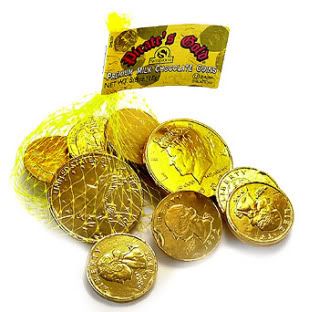
While the grown-ups enjoy a long meal, the children play games and ask riddles. They usually also receive gifts of “lucky money” (lai see) wrapped in red paper envelopes. The giving of gold-wrapped chocolate “coins” is a modern-day custom, but one that serves our mixed holiday well, as chocolate is a well-known Valentine commodity (with purported aphrodisiac qualities).
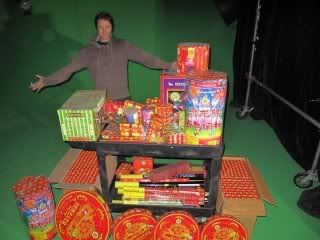
Fireworks are a big part of the celebration in China, but they're illegal here, so we'll have to make do with sparklers!
My stepson Sean is in Beijing right now, visiting an old friend of his who has a filming business there. Here he is posing with ALOT of fireworks:
The belief is that whatever happens on New Year’s day will influence the rest of the year, so everyone is very careful to say and do the right things, to think good thoughts and speak kind words. Visitors are offered gifts of sweets and fruit. The house is cleaned thoroughly and lots of food made ahead. Red and orange scrolls with Chinese characters conveying messages of good health, good, luck, long life, prosperity, and happiness, and flowers and pyramids of fruit decorate the houses. Oranges, kumquats and apples are the usual fruit, since apples are symbols of good luck and apples and oranges are both round (another lucky symbol) and are red and orange— colors of joy! (Apples are often known as “forbidden fruit” in Western mythology, which would add the requisite frisson of eroticism to the mixed festivities.) Sweet things are for the sweetness of life; dumplings and stuffed foods represent wealth; long, uncut noodles are for longevity.
Lots room for creativity there!
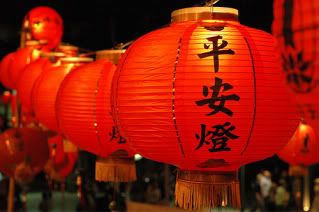
I had a tough time finding decorations in our small shopping area, but I managed to find some small paper lanterns, one big red and gold Chinese paper lantern, some of those little paper umbrellas, some sparklers, a paper dragon, and some gold-wrapped chocolate coins. I'm making some dark chocolate truffles with orange and ginger, and I found some red foil candy cups for them (they were all out of gold cups). These truffles will decorate an orange/ginger chocolate cake with chocolate/orange mousse filling and chocolate glaze.
So far, I know we have a yuba dish, a rice dish, an eggplant dish and a noodle dish coming. I'll make some plain rice, of course, and I have some flowering tea
 for a treat (read about it here!), but I'm still trying to decide on the other dishes (besides the cake and truffles). Gyoza (potstickers), I'm pretty sure.
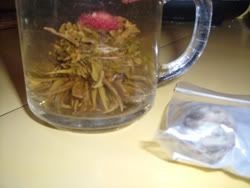
Flowering Tea
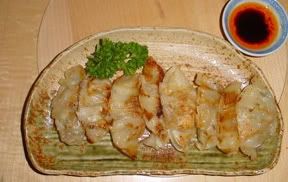
Gyoza (potstickers)
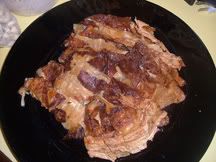
"Buddha's Chicken"
Maybe "Buddha's Chicken" or "Buddha's Roast Duck"; maybe Lion's Head (a braised dish of "meatballs" and cabbage). Other possibilities (it depends on what I have in the house!)are: Pineapple Sweet and Sour "Pork"; Chinese Mushroom/Rice "Sausage"; Stir-Fried Vegetarian "Duck" with Chili, Bell Pepper and Black Beans (all these recipes are from my Chinese cookbook
). I should do something with almonds!On several sites I read that fresh tofu and other white foods (except for rice, obviously) are not served during the New Year's festivities because white is considered unlucky for New Year, as the color signifies death and misfortune.So I was thinking that you could use marinated or baked or smoked tofu, or bean curd skin (yuba) in your vegetarian feast. But Eve+line commented: "There is no such taboo about tofu or white colour food. In fact it's common to use tofu and other "white foods" (like radishes; scallops) in Chinese New Year dishes. However, we usually stir-fry or braise tofu with lots of other colourful foods so the white colour is not an issue at all.
In fact it is traditional for Singaporean Chinese to have "steamboat" during the Chinese New Year Eve, and the meal will feature lots of "white food" like tofu, enoki mushrooms and meat dumplings." Perhaps it is different according to region-- I don't know. But I'm relieved that she wrote in about that!
I'll be back in a few days with a report, pics and recipes!
Kung Hey Fah Choy!
Thursday, February 4, 2010
"POTTED TOFU"-- MISO-MARINATED TOFU THAT'S KINDA LIKE FETA

"Potted Tofu" in a green salad. (The British "pot"-- or preserve-- meat or shrimp, so why not tofu?)
I hadn't made this recipe for a long time-- it is in my first
 and second books
 , but I have added a way of storing it for longer.
I devised this as a feta substitute after I read about the Japanese method of pickling tofu in miso
 . The usual method involves a paste of miso and sake or wine (and sometimes sesame oil, ginger, etc.), in which the sliced tofu is coated. It is placed in a covered container and left for almost a day. If left for several days, this makes a quite sharp-tasting product, like a ripe cheese. (I'll post about it at another time.)
My method is a little different and the result is delicious-- I'd almost forgotten how delicious! I intend to keep some of this marinating regularly! It's very simple to make.

Printable Recipe
BRYANNA'S POTTED TOFU (MISO-MARINATED TOFU)
You can make this very smooth and soft, or more firm, depending on your taste. You can use ordinary medium-firm tofu, or firm tofu, or even extra-firm silken tofu. I use extra-firm tofu and let it marinate for about three weeks. It softens up over time.
1 lb. tofu (see text above), cut into 1/2"slices or 1/2" by 1" chunks
Marinade:
1 cup water
1/2 cup miso
(not a really dark kind)2 tablespoons lemon juice, or rice vinegar
1 teaspoon salt
Mix the marinade ingredients together and immerse the tofu in the marinade in a suitable covered container. It should be fully covered. A canning jar will do fine, but I used a small pottery casserole. Keep it refrigerated for at least 1 1/2 weeks or up to 3 weeks.

Fish the tofu carefully out of the Marinade.

You can carefully rinse off the tofu with cold water, if you like. It will keep in a covered container for a week or so. For longer storage, I pour canola oil over the tofu (to cover)-- I didn't rinse it-- and add garlic cloves (peeled), dried red hot peppers, and herbs such as bay leaves, rosemary, sage leaves, etc.. You can also add strips of orange or lemon zest and some olives.
The tofu will keep (refrigerated) in the oil for many weeks. (Both the marinade and the oil can be reused for the next batch.)

Before serving, you can rinse the oil off (gently) under warm water.
Use as you would feta cheese!

Enjoy!

Subscribe to:
Posts (Atom)