Thursday, October 25, 2007
VEGAN IN WHITEHORSE?
 UPDATE: We went back in 2011 and it was even better

Spectacular mountains outside of Whitehorse, Yukon
DH and I just returned from Whitehorse, Yukon last weekend and I am finally getting caught up enough to blog! What a beautiful area! We were supposed to go in September, when it was a little warmer, but my mother had to move, so we had to postpone the trip. However, the weather was mostly sunny and there was only a tiny bit of snow some of the time.
We were invited by the owner of the Alpine Bakery in Whitehorse, Suat Tuzlak, to stay with his family and do a bit of consulting on vegan food in the bakery. I also presented a class in the bakery after-hours, cooking a vegan Italian 5-course menu, attended the inagaural meeting of the new vegetarian society, and spoke about vegetarian/vegan diet at three area high schools. Who knew that there would be so much interest in vegetarianism so far north!
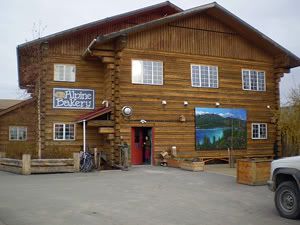
The back door of the Alpine bakery.
And it's not only vegetarianism, but organics, fair trade, community action, social responsibility, and good old fashioned kindness! They live their vision.
Here is Suat's philosophy for the bakery, and their whole life (from their website):
"Our Vision
In the modern world of globalization, this old adage takes on new meaning. Food and food production are affecting and changing our world in subtle and profound ways. Our food choices are no longer geared towards physical health. Instead, deciding what we put on our tables and in our mouths has become a political, environmental, social and spiritual choice.
Alpine Bakery's vision goes beyond daily bread to working more mindfully towards making positive changes in the world. Its mission is to offer wholesome organic food products, promote healthy and sustainable alternative lifestyle choices and foster social and environmental activism to its customers and community.
To fulfill its mission, Alpine Bakery:
is an environmentally conscious company – producing and selling environmentally friendly, ethical and healthy products including organic produce in support of sustainable agricultural practices and industry. It also maintains environmentally sound business practices and a "green" store in support of environmental initiatives and sources minimally packaged and recycled products.
is a socially responsible corporate citizen – demonstrating respect for its customers, employees, and the community it serves by providing an open and holistic atmosphere in its bakery along with purchasing locally produced and fairly traded goods, donating goods or labour to community organizations and actively participating in community initiatives;
is a community activist – promoting and supporting activism by educating and encouraging customers and citizens to participate in social and environmental awareness raising campaigns and opening its building to non-profit and alternative community organizations.
Alpine Bakery – exercising its power of choice."
Suat supports local growers and craftspeople. He has attended "slow food" conferences and supports organics. The bakery is full of literature on all of these areas, including globalization and social issues, which is available for customers to read, or to borrow.
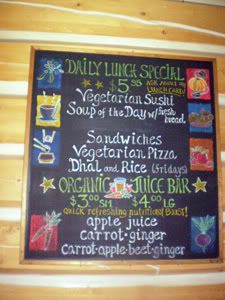
The bakery is a real meeting place (and Suat makes the upstairs available for community meetings, film presentations, and yoga classes). People come in for organic coffee or tea (non-dairy milk available!), or fresh juices, and something from the bakery case, or a generous bowl of hot soup with fresh bread, or pizza (vegan available), sandwiches or sushi (very reasonable prices, too). Everything is vegetarian, most of it vegan. Earth Balance is available instead of butter, if you wish. Invariably, one gets into a conversation with someone-- we met so many great people! (DH got to speak alot of French-- there is a large Francophone community in Whitehorse.)
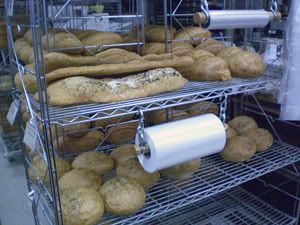
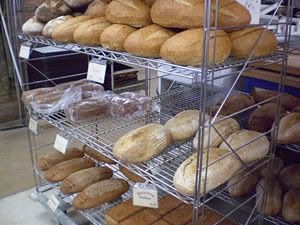
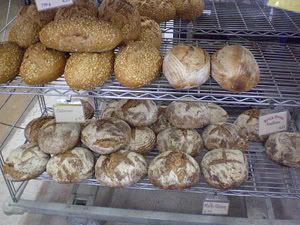
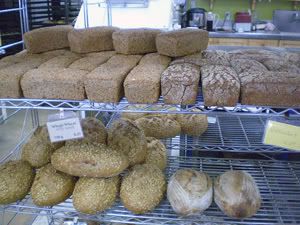
The bread in the bakery is AMAZING!! So many varieties (some are baked every day, and others on certain days of the week)-- many wheat-free. Many are brick oven breads and naturally leavened, or sourdough, breads (my favorites!). Here are some photos from the bakery:
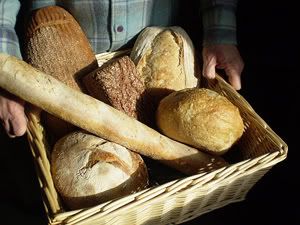
A display basket with some of the breads for a catering job
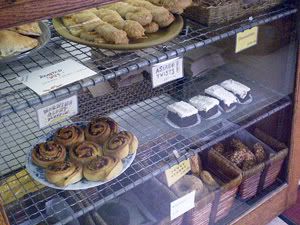
The bakery case with not-too-sweet cinnamon buns and a delicious chocolate-cranberry cake
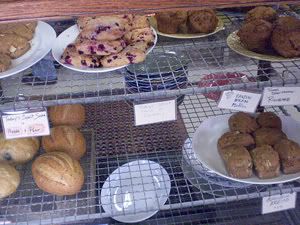
The bakery case, with cranberry scones, spelt muffins, and mini banana breads
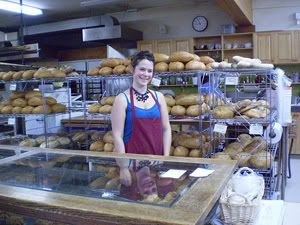
Genevieve
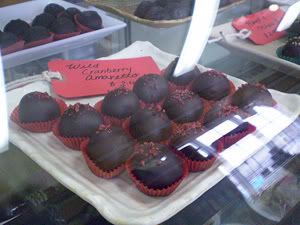
Antonio's handmade organic, fair-trade chocolate truffles, using local berries
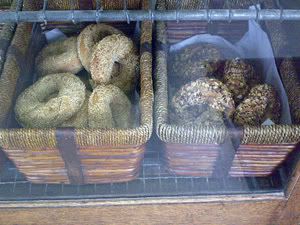
Fabulous bagels-- the real thing!
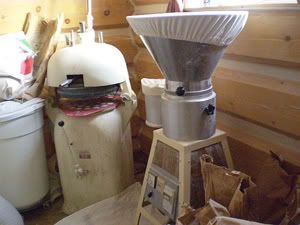
They grind some of their own flours
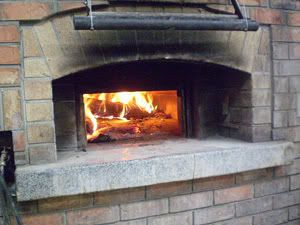
The brick oven
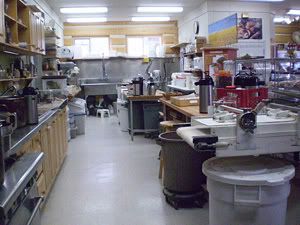
The spacious kitchen
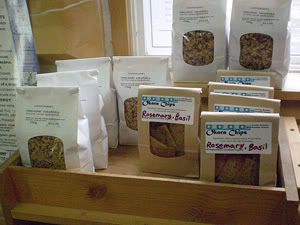
Homemade granola and okara biscuits (okara from their homemade tofu) (they also make soy jerky)
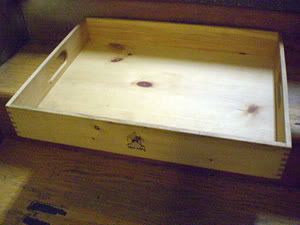
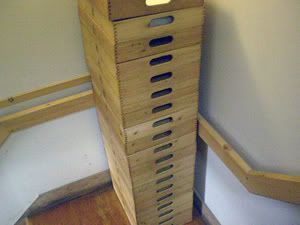
The handmade, locally-made wooden trays used for transporting foods for catering, etc.
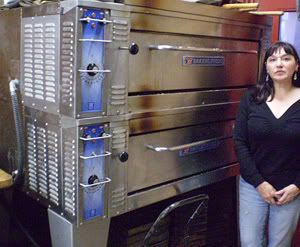
One of the propane ovens
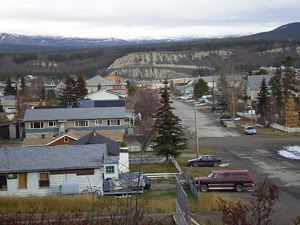
As for Whitehorse itself, there are many interesting art galleries, museums, shops, an excellent library, and, of course, the spectacular scenery. The Yukon River flows behind the town (you can't see it in the picture below), with the mountains behind:
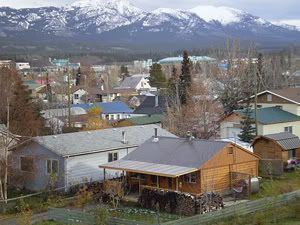
In this picture, you can see some of the large escarpment behind the city:
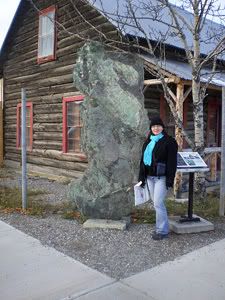
I stand beside a large copper "nugget" outside of one of the old original houses.
Some of the beautiful murals all over the city, depicting First Nations history, as well as Klondike history:




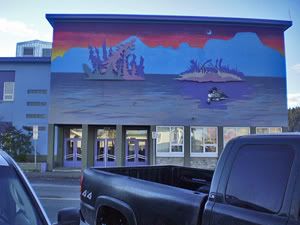
This was Yukon College, an alternative high school where I spoke to some of the students about vegetarian diet.

We managed to take two jaunts out of town, one to the south, where we visited a Tibetan lama (well, he was American, but follows Tibetan Buddhism) preparing for a 1000-day retreat in a cabin beside a beautiful lake in the woods. On the way there we stopped at the famous Emerald Lake (not the same lake mentioned above):

Emerald Lake
We also went on a 2 hour drive North, towards Haines, Alaska and saw beautiful mountains and glaciers (see the first picture).
The downtown has some old building, which give a "Wild West" feel:
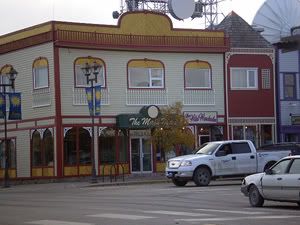

This was great bookstore-- they carried lots of vegetarian and vegan book s( even one of mine!), and the biggest selection of magazines I've seen in a long time, including some very progressive ones.
In fact, we found the community very progressive environmentally. They have a farmers' market that is "plastic bag free", and the city is being inovative about their wast. In Porter Creek, the suburb where we were staying, there is a pilot program:
"With support from the 2007 Canada Winter Games and the Federation of Canadian Municipalities, the City is testing out carts for residential waste. While 56% of the population with curbside waste collection report that they compost, that leaves many people who do not separate their waste.
Some residents cite the cost, the availability and the quality of compostable bags as barriers to composting. In addition, our Public Works employees report injuries from lifting these heavy bags.
To address these issues, we are asking approximately 500 households in Porter Creek (almost half the neighbourhood) to participate in a pilot curbside cart program. From June 2007 to May 2008, participants will use a green ventilated cart for compostables and a black cart for garbage. We hope this will make waste separation easy!"
You can read about their solid waste program here.
Of course, this is a great place to go for outdoor recreation-- cross country skiiing, canoeing, kayaking, etc. You can explore some of that here. There are many young people who come to Whitehorse to work and play. There are events going on every day, and lots of musicians, even bellydancers! They also have a state-of-the-art Recreation center, with pools, rinks, indoor tracks, weight rooms, etc., built for last year's Canada Games. We took advantage of the pool and hot tub a few times!
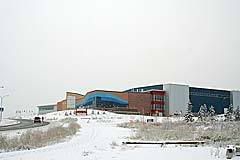
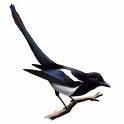
Well, I'm running out of steam here-- I'll probably have more to say about Whitehorse in future! I hope we'll go back in the summer-- there's lots we didn't get a chance to see and do. (There is a fine airport-- there are direct flights from Frankfurt, Germany!) And, we didn't get to see any wildlife, excepts squirrels and naughty but beautiful magpies!
We also didn't see the Northern Lights this time. Many Japanese tourists travel there just to see the spectacular natural light show in the sky.
It was a great experience, and I was so gratified by the interest in a plant-based diet, by everyone's friendliness, and by Suat and Chalia's generosity and kindness.
Here's a Yukon recipe for you:
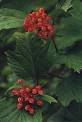
YUKON HIGHBUSH CRANBERRY JELLY
Highbush cranberries are a fruit of the honeysuckle, and completely different fruit than the lowbush or commercial cranberry. Highbush cranberries grow on a shrub with pointed leaves whereas cranberries grow on a vine with oval leaves. Highbush cranberries have a single seed, which needs to be removed. If you have ever smelled something reminiscent of stinky socks on a stroll through the bush, you are likely very close to a good patch of highbush cranberries. The seeded pulp of the highbush cranberry can be used interchangeably with the pulp of the regular cranberry in any recipe.
4 cups highbush cranberries
6 cups water
Additional water (as needed)
7 cups sugar
1/2 tsp. margarine
1 pouch liquid pectin (Certo)
Bring the berries and water to a boil and simmer for 10 minutes. Crush the berries or put through a food mill. Strain the juice in a cheesecloth-lined sieve. Add any additional water if need to bring the juice up to 5 cups.
Bring the juice and sugar up to a boil. Add the margarine, then the liquid pectin. Bring back to a boil, stirring constantly boil hard for 1 minute. Remove from heat. Skim foam from surface and pour into sterile pint jars and seal. Process in boiling water bath for 5 minutes.
Yield: 8 cups
Enjoy!



Monday, October 8, 2007
HAPPY THANKSGIVING, CANADA!
***I will not be blogging for about 1 1/2 weeks-- I'm going to Whitehorse, Yukon!***
Our Thanksgiving meal: (clockwise from top L) roasted butternut squash slices with orange juice and spices; Garlic and Herb Crusted Soy and Seitan "Pork Tenderloin" Roast (from the Vegan Feast newsletter); my vegan brown gravy with sauteed chanterelles; Succotash from my vegan holiday cookbook (green beans, lima beans, corn, red peppers, and green onions); Orange and Rosemary Cranberry sauce (from my upcoming issue of the Vegan Feast); Traditional vegan bread stuffing; and mashed potatoes.
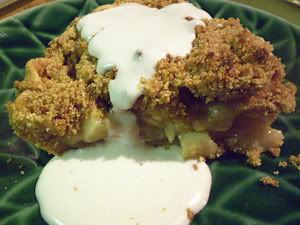 Dessert-- recipe below!
We celebrated last night with three vegan friends. We didn't have our usual big family dinner this year, due to various circumstances (but we'll get together next month for my mother's 90th birthday!). It was a spur of the moment dinner, because we were going to (perish the thought!) skip it altogether, since I'm down to the crunch getting the new issue of the Vegan Feast newsletter done and my house was less than tidy, shall we say. But I couldn't NOT have a harvest dinner, and I had one of my Soy and Seitan "Pork Tenderloin" roasts in the freezer (the one from the Everyday Dish DVD), a nice squash, some chanterelles, and some cranberries, so, I invited some close vegan friends who don't have family nearby and whose company we always enjoy.
The meal was ready from start to finish in 3 hours, and we stuffed ourselves with good food and great conversation! The main dish was made with my (thawed) frozen seitan "pork tenderloin", covered in a garlicky crust:

Leftover "pork tenderloin" is great in sandwiches with leftover cranberry sauce and vegan mayo! Crusty bread or rolls is the best, but it's good with any good bread;

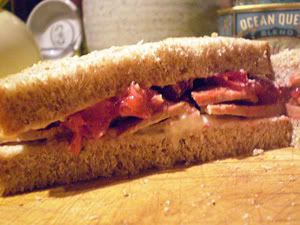
We ended the meal with the following Ginger Apple Crumb Pie, topped by a creamy dessert sauce.
Hope all you fellow Canadians had a great weekend!

Printable Recipe (both recipes)
GINGER APPLE CRUMB PIE
This is my version of a recipe by Wendy Kalen from the Nov. 2004 issue of Fine Cooking magazine. I used my Lowfat Wholewheat Oil Pastry, which is in all of my books, I think. I used wholewheat pastry flour and a little less sugar in the crumb topping, and substituted vegan buttery spread for the butter called for (and half as much!). My guests ate every ginger-y crumb! We ate it with the Creamy Cashew-Pear sauce on top, but a vanilla vegan "ice cream" would be good, too. (I calculated the Nutrition Facts using my Lowfat Wholewheat Oil pastry crust.)
1/ 9" pie crust (your favorite)
Filling:
6 medium apples, peeled, cored and thinly-sliced
2 tsp grated fresh ginger
1/2 cup sugar
3 Tbs unbleached white flour
Ginger Topping:
1 cup wholewheat pastry flour
1/3 cup packed brown sugar
1 1/2 tsp ground ginger
1 pinch salt
1/4 cup vegan buttery spread (try my homemade vegan palm-oil-free Buttah)
Preheat the oven to 425°F.
Make the crust and place it in the refrigerator until ready to fill.
Mix the sliced apples with the other filling ingredients and pile into the pie crust.
Mix the Topping ingredients with a pastry cutter, in a food processor, or with your fingers, until like crumbs. Top the apples evenly with the Crumb Topping.
Place the pie plate on a cookie sheet (to catch any drips!) and bake at 425°F for 20 minutes. Then reduce the heat to 375°F and bake another 30-35 minutes, or until the apples are tender and teh top is nicely browned.
Servings: 8
Nutrition Facts
Nutrition (per serving): 342.9 calories; 30% calories from fat; 11.5g total fat; 0.0mg cholesterol; 192.9mg sodium; 255.0mg potassium; 58.4g carbohydrates; 4.3g fiber; 31.3g sugar; 54.1g net carbs; 4.6g protein; 7.0 points.
BRYANNA'S CREAMY CASHEW-PEAR DESSERT SAUCE (WITH A LITTLE HELP FROM HOLLY!)
We couldn't get any vegan vanilla "ice cream" on the island yesterday, so I decided to make a sauce to go with the apple pie. I started adding cashews to soymilk in the Vita-Mix, and my friend Holly, who is a third-generation vegetarian (!!), mentioned that her mother used to make a similar sauce, but she added pears to it. So, since I had two large ripe pears that needed using, here is my version, which she said tasted very similar to her mother's. It is luscious, and would be good on steamed pudding, chocolate cake, or anything else you can think of!
3/4 cup soymilk (or other nondairy milk)
1/4 cup organic cashew pieces
2 large ripe pears, peeled and cored and cut up (the pears should not be firm or hard, and should be sweet)
1/2 tsp pure vanilla extract
1 pinch salt
Combine all of the ingredients in a blender or Vita-Mix and blend until VERY smooth. Place in a covered bowl and refrigerate for at least 2 hours.
Servings: 8
Yield: 2 cups
Nutrition Facts
Nutrition (per serving): 61.5 calories; 30% calories from fat; 2.2g total fat; 0.0mg cholesterol; 47.6mg sodium; 118.5mg potassium; 10.0g carbohydrates; 1.9g fiber; 6.0g sugar; 8.2g net carbs; 1.5g protein; 1.0 points.
Enjoy!
Monday, October 1, 2007
SYNERGIZING UMAMI-- COOKING WITH WINE AND HOW TO MAKE VEGAN FLAVOR EXPLODE!
photo by John Kelly
I was making a quick saute for dinner the other night with my crispy Marinated tofu (Breast of Tofu) and a simple sauce of sauteed chanterelle mushrooms, garlic, herbs, broth, and dry white wine, when it entered my mind that many vegan recipes I see don't utilize wine. Interesting, I thought-- I use it all the time! I thought about this more while I enjoyed the dish with some orzo pilaf-- full-bodied and absolutely smashingly delicious in spite of its simplicity.
I lived in a winery in central California from age four to eleven. My mother had unlimited amounts of excellent wine to cook with, so I developed a taste for the rich flavor that wine lends to food. Later, when I became a vegan, I realized that wine was a powerful flavor enhancer, giving many meatless dishes a character and body that they lacked without it. But I didn’t know why that was so.
I used to think that it was perhaps the fruity flavor and the acidity of wine that worked the magic. But it’s more than that. It's the "fifth flavor"-- umami. (Read all about it here. And about recent umami discoveries further down.) Wine contains umami compounds because it is a fermented substance, and umami is a flavor enhancer. But, beyond umami, wine contains alcohol, and alcohol is a powerful flavor extractor. Some flavor components dissolve in water, and others in fat. But alcohol dissolves not only water-soluble and fat-soluble flavors, but also flavors that dissolve in neither water nor fat.
This capacity is a wonderful boon to low-fat cooks, because, without it, we lose the fat-soluble flavors (which is why fat-free foods often taste boring). No wonder I reach for a wine bottle when a dish is missing that special something!
When you splash some wine into the pan to scrape up the browned bits, you are not only getting the flavors of the wine and the caramelized bits (double umami—8 times the flavor!), but you are also releasing some extra flavors that only alcohol can extract! How neat is that?
What about when the alcohol boils off? Well, take the case of the famous pasta sauce made with tomatoes and vodka. This liquor is rather tasteless, but it does contain a lot of alcohol. The alcohol probably releases some flavor component in the tomatoes (more umami compounds), which releases into the sauce. Then it doesn’t matter if most of it boils off.
Worried about alcohol in your food? I have to tell you that I am not a drinker! I have a very low capacity for alcohol (1 glass of wine is about my limit)-- it makes me sleepy. I have never been drunk, I confess it! And this is in spite of the fact that my mother's California-French-Italian fusion cooking almost always contained wine! We even had sherry in our creamed tuna on toast (a favorite dish in the 1950's-- I'm dating myself...oh, well!). So, obviously, this didn't turn me into a wino!
The rate of alcohol evaporation depends on several factors: the intensity of heat; the length of cooking time; the pot or pan (greater surface area exposed means greater evaporation— for instance, the same dish cooked in a 10-inch skillet will retain more alcohol than that cooked in a 12-inch skillet); exposure to air; other ingredients in the recipe (breadcrumbs, for example, may absorb alcohol and protect it from the heat); and the stage at which the alcohol is added during cooking. In most cases, some alcohol is retained in the dish. Flambéing removes about 25% of the alcohol; simmering on a stovetop for 1/2 an hour evaporates about 65%; 2 and 1/2 hours of simmering removes about 95%.
photo by John Kelly
MORE ABOUT UMAMI IN WINE AND OTHER PLANT FOODS:
Since I wrote the article I linked to above, there has been a lot more research on umami. We get umami compounds (which means “delicious” combined with “essence”, and is used in Japan to describe a food that reaches a state of perfection) in many food-born substances.
From the 1950’s on, umami-triggering nucleotides have been found. In 1998, two leading Japanese researchers, Yamaguchi and Ninomiya, published a list of 39 substances they believed to trigger umami, including amino acids, ibotenic and tricolomic acids, succinic acid, theanine, and an octopeptide (compound of 8 amino acids).
Dr. Shintaro Kodama was the first researcher to discover a quality called synergy in some nucleotides, which dramatically intensified the qualities of umami compounds, thus explaining the “flavor explosion” I mentioned in the article. And we know now that browning protein-rich foods, such as a golden-brown crust on bread, or the aging of wine or vinegar, the brewing of beer, the reducing of stock, the fermenting of a bread starter, etc., etc., produce hundreds of compounds that enhance umami even further, producing complex tastes and aromas. Aged wines, sake and distilled spirits develop more umami compounds and can contribute more than flavor to foods—they contribute balance and enhancement of other flavors.
Some plant foods that are rich in free amino acids and have lots of umami taste when raw are: sea vegetables, corn, peas, tomatoes, mature potatoes, bell peppers, winter squash, nuts and seeds. Other plant foods benefit from cooking or fermenting (such as making cabbage into sauerkraut, or pickling vegetables), which increases the umami taste, or can be paired with stronger umami foods, such as a salad dressing. Soy foods increase in umami taste when they are roasted, cooked, or fermented, because they are one of the most protein-rich foods around. Soy sauce, roasted soy beans, miso and, various other fermented Asian bean pastes, and fermented tofu deliver a great umami punch even when used in small amounts.
Mushrooms and fungi are a great source of synergizing umami, and, generally speaking, the darker the color, the more umami. Dried mushrooms pack an even greater punch. Yeasts (both active and non-active nutritional yeast and yeast extract, such as Marmite), which is also a fungi (and includes sourdough, a natural yeast), have umami compounds. They also act as synergizers. For instance, in a live yeast or sourdough starter, the enzymic action develops the umami in wheat flour to “ripen” the dough and develop its flavor.
I'm sure that there will be more discoveries to come! In the meantime, we can use this knowledge to expandf the flavor possibilities of vegan foods! (Can you tell I get excited about this?)
SUBSTITUTES:
Absolutely can't use wine or other alcohol, even in cooking? I would recommend using a non-alcoholic wine, because it is fermented before the alcohol is removed. It won't have the flavor-releasing qualities of alcohol, but it will contain umami compounds. See http://nypost.com/2015/01/10/non-alcoholic-beer-and-wine-are-hot-but-do-they-taste-good/ But you'll have to contact the manufacturer to find out if any animal products are used in the wine-making process. http://nypost.com/2015/01/10/non-alcoholic-beer-and-wine-are-hot-but-do-they-taste-good/
VEGAN WINE?
For brands, check out http://www.barnivore.com/wine, "Your vegan wine, beer, and liquor guide"
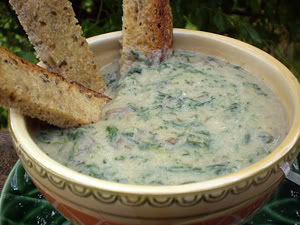
I made this soup for lunch today in a big hurry. It combines umami compounds in mushrooms, bouillon, and white wine for a delicious meal!
Printable Recipe
BRYANNA'S CREAMY POTATO, MUSHROOM AND SPINACH BISQUE (WW CORE PLAN-COMPATIBLE)
Servings: 4
This is something I created on the spur of the moment with things I needed to use up, and I needed lunch FAST. It's delicious with wholewheat sourdough toast. The mushroom broth and wine make this quick soup very flavorful.
2 tsp olive oil
1 medium onion, chopped
2 cloves garlic, chopped
2 cups chopped cremini or portobello mushrooms (scrape the gills out of portobellos with the side of a spoon)
1/2 cup dry white wine (can be non-alcoholic) OR white vermouth
1 cup homemade mushroom broth OR use vegetarian bouillon with 1/2 Tbs. Pistol River Porcini Mushroom Powder added
2 cups non-dairy milk (use a nice, creamy one, or use half non-dairy milk and half vegan creamer)
1 tsp salt
1/2 tsp dried thyme
freshly-ground black pepper to taste
1/3 to 1/2 cup mashed potato flakes (You can buy organic vegan flakes in some HF stores, or from amazon or veganessentials.com [which ships to Canada at a reasonable price].) (1/2 cup makes quite a thick soup) OR, if you have no potato flakes, use 1/2 to 3/4 cup plain mashed potatoes
1/4 cup squeezed, thawed frozen or cooked, chopped spinach OR chard
(I had some home-cooked spinach in the freezer that I used, so I can't tell you how many ounces it was raw, unfortunately. I measured it squeezed quite dry.)
In a small soup pot, heat the oil, and then add the onions and garlic. Stir-fry until the onion starts to soften, and add the mushrooms.
Stir-fry briefly, then add half of the wine and let it cook off. Add the remaining wine, thyme, salt and pepper. Stir in the soymilk, and then the potato flakes, the smaller amount first. Remember that this soup will thicken as it stands. Stir in the spinach, heat through, and serve immediately.
Nutrition Facts
Nutrition (per serving): 118.3 calories; 25% calories from fat; 3.6g total fat; 0.0mg cholesterol; 552.9mg sodium; 450.4mg potassium; 13.1g carbohydrates; 2.3g fiber; 5.3g sugar; 10.8g net carbs; 5.6g protein; 2.2 points.
Salud!
Monday, September 24, 2007
MAPLE WALNUT SHEAF OF WHEAT BREAD
For Canadians out there, whose Thanksgiving celebration occurs in only two weeks (!) (and Americans who are thinking well ahead!)), here is the recipe for the harvest bread that I pictured on last year's Thanksgiving blog:
 |
| Photo by Fireweed |
Printable Recipe
BRYANNA’S MAPLE WALNUT SHEAF OF WHEAT BREAD
Makes 2 loaves
This bread is not only nutritious and delicious, but it also makes a spectacular centerpiece! It's not hard to make-- honestly! This can be made ahead and frozen, well wrapped. You can shape the dough as I have suggested, or do it your own way and get creative!
1 1/2 cups soymilk or other nondairy milk
1/3 cup vegan buttery spread-- try my homemade palm-oil-free recipe (or you can use oil instead)
1/4 cup maple syrup
1 1/2 tsp. sea salt
1/3 cup medium bulgur wheat
1/2 cup warm water
2 tsp. dry active baking yeast (or 1 1/2 tsp. instant yeast)
1 cup walnut pieces, toasted and chopped fine (you don’t want big chunks because that makes the dough hard to roll into thin “ropes”)
2 cups whole wheat flour
3-4 cups unbleached white flour
(NOTE: Use the all-purpose version of both if Canadian; bread flour if American-- Canadian AP flour contains a higher level of gluten than US AP flour)
cornmeal to sprinkle on baking sheet
soy or nut milk for glazing
Scald the soymilk (you can do this in the microwave, in a Pyrex measuring beaker or glass bowl, for 1 minute on 100% power) and then add the vegan buttery spread or oil, syrup, salt, and bulgur wheat, mixing it in a large bowl or the bowl of your stand mixer with a dough hook attachment. Allow this to cool to lukewarm.
Meanwhile, dissolve yeast in the warm water in a cup until bubbly. Add the dissolved yeast, walnuts, and the whole wheat flour to the milk-bulgur-etc. mixture. Beat until smooth. Add the wheat germ, and then add unbleached flour to make a knead-able dough (it can be a little sticky—that’s better than too dry).
Kneading and Rising-- you have 4 options:
1.) If kneading by hand: Turn out the dough onto a large square of baking parchment and let it rest (covered by a clean damp towel) while you clean the bowl. Knead vigorously, adding a little more white flour as necessary, but use as little as possible to avoid making an overly-stiff dough, for about 10 minutes, until you have a smooth, elastic and relatively non-sticky, but moist, dough. Oil the bowl and return the dough to it. Cover and let rise in a warm place until doubled in bulk, about 1 1/2 to 2 hours.
2.) If kneading by stand-mixer with dough hook: Add unbleached flour until the dough pulls cleanly away from the sides of the bowl while it kneads. Knead for 8-10 minutes. Turn the machine off. If your bowl is big enough (a Bosch, for instance), you can just place the cover over it and let it rise in the same bowl. If there is not room for it to rise, place it in a larger oiled bowl, cover and let rise in a warm place until doubled, about 1 1/2 to 2 hours.
3.)You mix and knead and rise the dough in an automatic bread machine according to your machine's directions(use the Dough Cycle), but you’ll have to use only half the recipe.
4.) You can also make the dough in a food processor, but again, unless you have a large processor, you’ll have to make only half the recipe, or do it in two batches. After the dough forms a ball on the blade, process for 30 seconds. Place the dough in an oiled bowl (with room to double), cover and let rise in a warm place until doubled, about 1 1/2 to 2 hours.
Shaping:
Punch the dough down and divide it in half . Keep the half you are not working with covered with a damp cloth or a plastic bag while you work on the other half. Avoid handling the dough too much prior to rolling it out— that may make it tough and hard to handle. If this happens, just cover it and let it rest for 10 minutes or so to “relax” the gluten.
Dough rolling technique: I use an unfloured kitchen counter top and form the ball of dough into a rough sort of cigar-shape. Then a I roll with splayed fingers from the middle outwards. If the dough breaks, just pinch it back together. If one end is thicker than the other, gently hold the middle of the rope down with the splayed fingers of one hand and roll the thicker end with the splayed fingers of the other.
 |
| Photo by Fireweed |
Roll 4 pieces into 18” ropes. Place one 18” rope lengthwise on the center of a greased baking sheet, which has been sprinkled with cornmeal, bending the top third of the rope off to the left at a 45 degree angle. Place the other 18” rope on the sheet next to and touching the first rope, but bend the top third off to the right. Repeat this using the other two 18” ropes, placing them so that they are touching.
Roll the remaining dough (from the half you are working with) into 15” ropes. Arrange them on top of and around the 18” ropes. Spread out the ropes a little at the bottom to form the base of the “sheaf”. Drape the twisted 12” ropes around the center of the loaf by “tying” the sheaf together, tucking the ends under gently on either side.
Cover loosely with a large plastic bag and let the dough rise again for about 40 minutes, or until doubled.
Preheat the oven to 350 degrees F.
Turn the baking sheet so that the top section faces you. On each rope (or “stalk”), use kitchen shears or scissors to snip the dough above the “tied” part of the “sheaf” and give it the appearance of wheat. Snip 2/3 of the way through the dough at a 45 degree angle to the top of the dough. Repeat at 1/2” intervals. This will create little pointy shapes that make it look like wheat.
 |
| Photo by Fireweed |
Paint the entire surface with the soy or nut milk and bake for 25 minutes. If the ends of the stalks seem to be browning too much, cover them with foil. Remove from the baking sheet, using spatulas, while still warm. Cool on a rack.
NOTE: you can make "wheat stalk" breadsticks with this dough, if you like-- bake separated by an inch or two until golden brown, which will only take about 15 minutes. You can stand the "stalks" up in a glass vase.
 |
| Photo by Fireweed |
Monday, September 17, 2007
LEMON, SAGE, ROSEMARY AND THYME JAM

I like to blog twice a week, but it hasn't been happening lately! Not only am I testing recipes for the upcoming Vegan Feast newsletter (and I don't like to reveal too much ahead of time and spoil the surprise for subscribers!) AND a book I'm co-authoring, so that doesn't leave alot of time for blog recipes!
The following unusual but delectable "jam" recipe was inspired by one in Sally Schneider's wonderful book "The Improvisational Cook", which was inspired by a recipe from Mario Batali-- "Lemon Oregano Jam". It attracted me right away because I love just about anything lemony, and I thought it would make an unusual accompaniment to a simple dish such as the Japanese dish "Tonkatsu" (crispy, thin, breaded cutlets), an example of "yohshuko", or Japanese-style Western dishes.
I just call it "Katsu", which means "cutlet", because the "ton" part of "tonkatsu" means "pork"! (I just dredged my vegan cutlets in flour, then soymilk curdled with a little lemon juice, then panko [Japanese breadcrumbs] and pan-fried them in a little oil.)
Ms. Schneider used a little more oil in the jam recipe and about 1/3 of the salt that Mr. Batali did, as did I. They both used pepper, but I omitted it-- it just didn't appeal to me in this recipe. I replaced the oregano with fresh sage, rosemary and thyme (recalling the Simon and Garfunkel song). It was really easy to make, and did indeed emulsify into a creamy, but not oily, mixture. I had it on a Tofurkey slice sandwich with my Italian Plum Jam (I didn't have any vegan mayo made!), and it was delicious. I also had it on steamed potatoes-- equally yummy! Ms. Schneider also suggest folding into mayonnaise for a cold sauce for meatloaf, spreading it on hazelnut-butter sandwiches, stirring into yogurt, stirring into warm potato salad...
"The Improvisational Cook" is an interesting volume (NOT vegetarian, but that never deters me!) , well worth at least checking out of your library for a perusal:

Amy Sherman writes on the KQED Food Blog, "Bay Area Bites",:
"...You have a better chance of successful improvisation and creativity if you have a very firm grasp of the basics. Creativity can be inspired in many ways, a meal in a restaurant, a new cookbook, a trip to the market, etc. But improvisation is a different matter.
Improvisation is "a performance given without planning or preparation". So basically you are relying on your brain for inspiration. Sally Schneider's new book, The Improvisational Cook is an exploration into the concept of improvisation in the kitchen and provides some wonderful recipes and ideas along the way. Schneider explains how recipes work in a section called "Understanding", and then various riffs on a single recipe.
How does it work? Here is an example of an idea and recipe--the author begins with a Lemon Oregano Jam that she first tasted at Mario Batali's restaurant Babbo. She explains that the technique of pureeing the whole lemon is crucial and that the addition of oil helps to round out the flavor and creates an emulsion. In addition to the original recipe, her variations include Lemon Lavender Jam, Tangelo Jam, Tangerinesicle Parfaits, and Meyer Lemon Dessert Sauce and Filling.
Just as in jazz, the best improvisations come from the best musicians and Schneider is an accomplished cook who you can trust and will in all likelihood inspire you as well." (KQED is a well-known San Francisco public broadcasting station, with which I am quite familiar, since I grew up there.)
For my first improv on her recipe (I didn't want to get too far from the original the first time-- I wanted to get a sense of the original before branching out further) I just changed the herbs, using what I had in my garden. This is the result:

Printable Recipe
LEMON, SAGE, ROSEMARY, AND THYME JAM
3 medium lemons (preferably with thin rinds)
1/4 cup sugar
1/2 tsp kosher salt
3 Tbs extra-virgin olive oil
1 Tbs finely chopped fresh rosemary leaves
1 Tbs finely chopped fresh sage leaves
1 Tbs finely chopped fresh thyme
Scrub the lemons with 3 parts water plus 1 part white vinegar, then pat dry with paper towels. Cut each lemon into thin slices and remove and discard the seeds.

Place the lemon pieces, sugar and salt in a food processor and process to a coarse puree. With the motor running, add the olive oil in a thin stream; the mixture should emulsify, becoming honey-like in consistency. Add the herbs, pulsing to mix.
The jam can be prepared up to this stage and kept, refrigerated, for several weeks. Transfer it to a clean glass jar, placing a piece of plastic wrap between the top of the jar and the lid to keep the lid from corroding. Bring to room temperature before serving (it solidifies), stir to re-combine.
Yield: about 1 1/3 cup
Nutrition Facts
Nutrition (per 2 Tbs. serving): 56.6 calories; 58% calories from fat; 3.8g total fat; 0.0mg cholesterol; 86.5mg sodium; 45.6mg potassium; 7.8g carbohydrates; 1.4g fiber; 4.5g sugar; 6.4g net carbs; 0.4g protein; 1.2 points.
Enjoy!

Monday, September 10, 2007
ARTICHOKE, FENNEL AND POTATO STEW

I'm crazy for artichokes. I grew up in California and in May, artichoke season, my mother would often just cook a platter of artichokes for dinner and we would just eat artichokes until we were full! We dipped the "meaty" part of the leaves and hearts (after scraping the "fuzz" away with the side of a spoon) in melted butter if they were hot, or mayonnaise if they were cold-- nothing fancy. By the time we were all satisfied, each of us would have a heaping bowl of artichoke leaves, scraped clean by our teeth, beside our plate. Heaven!
Yesterday I was admiring my jar of Kirkland Artichoke Hearts (PS: they have water-packed ones, too):

I had purchased two 65 oz. jars last time I made one of my very infrequent trips to Costco. They are so good--the marinade is delicious(not overly-acidic), and there are halves and quarters, nice and plump. I was trying to figure out a dinner to use up some things, a fennel bulb among them. So I came up with the following, in which I could make use of some of those nice marinated artichoke hearts that I was craving. We loved sopping up the tart juices with crusty bread!

Printable Recipe
BRYANNA'S ARTICHOKE, POTATO, AND FENNEL STEW
1 Tbs olive oil
1 medium onion, chopped
2 cloves garlic, chopped
32 marinated artichoke heart quarters in oil (or 16 halves), rinsed and drained
1 fennel bulb, trimmed and diced
1/2 lb small red, white or yellow potatoes, scrubbed and cut into wedges
1 Tbs flour
1 spring fresh rosemary
1 bay leaf
1/2 tsp dried thyme leaves
2 cups vegetarian "chicken-style" broth (or use my homemade broth powder)
1/2 lemon, sliced (with peel)
salt and freshly-ground pepper to taste
Heat the olive oil in a small stew pot. Add the onions and garlic and stir-fry until the onions wilt. Add the artichoke hearts, fennel and potatoes, and stir-fry briefly. Sprinkle with the flour and stir. Add the herbs, and then stir in the broth. Add the lemon slices.
Bring to a boil, then turn down to a gentle simmer, cover and cook for 10 minutes. Remove the lemon slices and cook 30 minutes more, or until the potatoes are tender. Taste for salt and pepper.
Serve with crusty bread.
Servings: 3
Nutrition Facts
Nutrition (per serving): 198.9 calories; 21% calories from fat; 5.0g total fat; 0.0mg cholesterol; 127.2mg sodium; 1126.4mg potassium; 37.4g carbohydrates; 9.7g fiber; 1.8g sugar; 27.7g net carbs; 6.4g protein; 3.6 points.
Enjoy!

Monday, September 3, 2007
JEWEL-LIKE, TANGY-SWEET ITALIAN PLUM JAM

Italian plum jam with some of the tiny plums and the leaves of the tree
I'm not big on canning or jam-making anymore, but I recently made a small batch of beautiful, tangy Italian plum jam.
We have a volunteer plum tree with little tiny plums. This is only the second year that we've had any plums from it. Last year we had lots and I made Chinese plum sauce and plum chutney. This year we only got a few. The racoons, new to Denman Is. in the last few years, got alot of them I think-- at least we chased off two fighting in the tree early one morning! I happened to see a recipe from vegetarian cookbook author Anna Thomas for an Italian jam using tiny plums, so I had the perfect material for this recipe!
 |
| You can see how small the plums are in this picture |
I think the kind we have are "Hardy Plums". See this page for information on plum varieties. It says: "these are selections of native American species of wild plums, or hybrids between these species. These plums are hardy, late blooming, usually small or very small plums adapted to the rigors of northern continental climates where most of even the more winter hardy European plum are not successful."
I changed Ms. Thomas' cooking method a little. My method eliminates the time-consuming task of pitting all those little plums by cooking them whole for a few minutes with the other ingredients, and then running them through a food mill.
The Food Dictionary at epicurious.com describes a food mill as: "A kitchen utensil that can be best described as a mechanical SIEVE. It has a hand-turned paddle that forces food through a strainer plate at the bottom, thereby removing skin, seeds and fiber. Some food mills come equipped with several interchangeable plates with small, medium and large holes."
© Copyright Barron's Educational Services, Inc. 1995 based on THE FOOD LOVER'S COMPANION, 2nd edition, by Sharon Tyler Herbst.

This is the one I have, a 2 qt. capacity model.
Kitchen and cookware shops carry them, and they are handy for applesauce, tomato sauce, and many other kitchen tasks.
As another vendor states: "This timeless, hand-operated, kitchen tool is a multi-function wonder that removes objectionables, like tiny seeds, skins, fiber and cores from almost any fruit or vegetable." And: "Outstanding for homemade sauces, purees, jams, soups and natural baby foods."
I've had this one for many years, and, though I don't use it often, I wouldn't be without it. Besides the obvious advantage of being able to cook fruits and veggies without first removing the skins, seeds, stems, etc, and then being able to remove them with a few cranks of the handle, if you want to puree something without causing alot of bubbles (as electric machines do),this is the way to go. (I'm thinking, for instance, of the Italian pureed soup called "passati", or, literally, "passed through"-- in other words, passed through the mill.)
Printable Recipe
Anna Thomas's ITALIAN PRUNE PLUM JAM (small batch, with my variation in technique)
"This is made from the plums that become prunes when they are dried. In some markets I've seen them called prunes, and in others Italian plums, or prune plums, but they are the very small plums with the egg-like shape and the dusky purple skin." Anna Thomas
Note from Bryanna: My jam was not really thick, but spreadable.
1 1/2 lbs small dark plums or Italian prune plums (see Cooking Tips)
3/4 cups organic unbleached granulated sugar
3 Tbs fresh (or bottled organic) lemon juice
Wash the plums well, and combine them with the sugar and lemon juice in a medium stainless steel pot. Stir slowly over very low heat until the sugar is completely dissolved.
Raise the heat and boil the plums gently for about 5 minutes, or until the plums soften and split, skimming off any foam that forms on top. Pour the plums into your food mill (balanced over a pot) and turn until all of the pulp goes through and only the pits and a few skins are left behind. (Scrape all the pulp off the bottom of the food mill into the pot with the rest.)
Return the strained mixture to the heat and bring to a gently simmer again. Cook about 3 or 4 minutes more. When the fruit seems to be thickening slightly, turn off the heat and put a tablespoon or two of the jam on a small plate, then put the plate in the freezer. After a couple of minutes, check the test batch. If it has a jam-like consistancy, you're done. If it's too runny, boil the jam for a few more minutes and test again.
Ladle the jam into clean half-pint jars and keep it in the refrigerator. It should last for a couple of weeks, but it will be eaten before then.
Yield: about 1 1/2 cups
Nutrition Facts
Nutrition (per 2 Tbs.): 75.4 calories; 1% calories from fat; 0.2g total fat; 0.0mg cholesterol; 0.0mg sodium; 94.0mg potassium; 19.3g carbohydrates; 0.8g fiber; 18.2g sugar; 18.5g net carbs; 0.4g protein; 1.4 points.
Enjoy!

Subscribe to:
Posts (Atom)