Showing posts with label ajvar. Show all posts
Showing posts with label ajvar. Show all posts
Monday, May 30, 2011
WHAT ARE YOUR (CURRENT) FAVORITE CONDIMENTS?
 Just wondering! Here are 5 of my fave condiments right now (What are yours?):
1.) Bacon Salt (yes, it can be vegan!):
 A baked potato with my homemade Bacon Salt-- here's my recipe. All the the bacon salt
 I have seen on the Internet is vegetarian-- it either just contains the flavorings for bacon (liquid smoke, brown sugar, etc.), or it contains some soy bacon bits
 , but some brands contain milk products (like J&D brand).
The sodium content of this condiment is much, much lower than table salt-- 1 teaspoon of my homemade recipe contains 90.2 mg. of sodium; 1 teaspoon of table salt contains 1880 mg of sodium! My recipe is much lower in sodium than the commercial brands I've checked.
If you don't want to make it yourself, this is the one I tasted first: Chef Salt Bacon BBQ Salt -- it is vegan.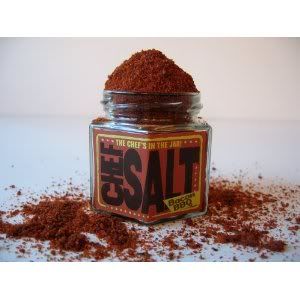
USES FOR BACON SALT:
On corn on the cob and popcorn and homemade oven-fries; seitan steaks; in BBQ sauces; in marinades for seitan TVP and tofu; in dips, spreads, and vegan mayonnaise; in baked beans; in salad dressings and on salads; as a seasoning in homemade seitan products; in mashed potatoes; on scrambled tofu; in eggless egg salad (made with tofu); roll tofu pieces in it and pan-fry; mix with olive oil for a French bread dip; on potatoes; in potato salad; on or in veggie burgers; on a grilled (vegan) cheese sandwich; with vegan cream cheese and/or vegan sour cream as a dip or spread; on steamed or grilled or roasted veggies; on pasta with a thin creamy sauce (a sort of vegan carbonara); on grits; in vegan mac'n'cheeze; on many types of sandwiches; in soups (or on them); on homemade potato crisps (chips) or other veggie crisps-- kale chips, maybe?-- I'm sure that's just the beginning!
2.) Peruvian Restaurant-Style "Green Sauce":
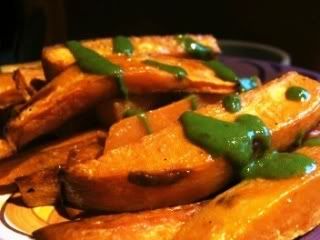 Sweet Potato Oven-Fries with Peruvian Restaurant-Style "Green Sauce". Here's my recipe.
 Pita bread with za-atar and olive oil

-- it is vegan.USES FOR BACON SALT:
On corn on the cob and popcorn and homemade oven-fries; seitan steaks; in BBQ sauces; in marinades for seitan TVP and tofu; in dips, spreads, and vegan mayonnaise; in baked beans; in salad dressings and on salads; as a seasoning in homemade seitan products; in mashed potatoes; on scrambled tofu; in eggless egg salad (made with tofu); roll tofu pieces in it and pan-fry; mix with olive oil for a French bread dip; on potatoes; in potato salad; on or in veggie burgers; on a grilled (vegan) cheese sandwich; with vegan cream cheese and/or vegan sour cream as a dip or spread; on steamed or grilled or roasted veggies; on pasta with a thin creamy sauce (a sort of vegan carbonara); on grits; in vegan mac'n'cheeze; on many types of sandwiches; in soups (or on them); on homemade potato crisps (chips) or other veggie crisps-- kale chips, maybe?-- I'm sure that's just the beginning!
2.) Peruvian Restaurant-Style "Green Sauce":
 Sweet Potato Oven-Fries with Peruvian Restaurant-Style "Green Sauce". Here's my recipe.
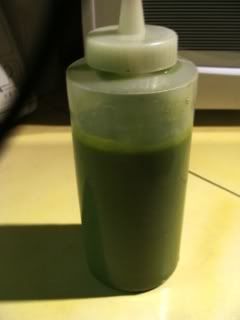
I still like good ketchup on fries, but we love this creamy, spicy sauce not only on sweet potato oven-fries, but also on veggie burgers and even tomato sandwiches! They use it as a dip for bread and yucca fries in Peruvian restaurants, too. It's pretty addictive! (But, that's no problem, as my recipe has negligible fat and calories.)

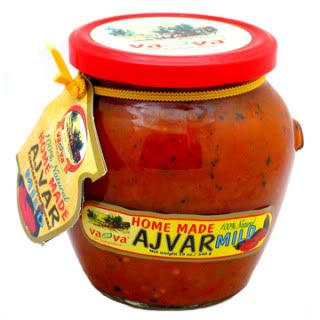
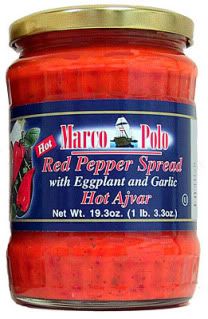
3.) Ajvar (Pronounced Eye-vahr) (Balkan or Serbian "Salsa"): This is a name of Turkish origin given to a popular Balkan spread or relish made of roasted peppers and eggplant (and sometimes other vegetables, too). I make it with zucchini instead of eggplant sometimes. Here's my recipe for making it at home, but it's widely available commercially.
This delicious condiment is originally from Macedonia, Croatia, and Serbia, but is popular also in Albania, Greece, Bulgaria, Hungary, Turkey, etc., and all over the Middle East now, it seems. It is sometimes called "vegetable caviar", and there are hot ajvars and mild ajvars
 . In some areas they use roasted green peppers.
Commercial versions are inexpensive in Middle Eastern stores and many brands are available from amazon.com. Trader Joe's sells it but they don't call it ajvar on the label. They call it Trader Joe's Red Pepper Spread with Eggplant and Garlic. I understand that Whole Foods sells an organic version with "Ajvar" on the label.
and mild ajvars. In some areas they use roasted green peppers.Commercial versions are inexpensive in Middle Eastern stores and many brands are available from amazon.com. Trader Joe's sells it but they don't call it ajvar on the label. They call it Trader Joe's Red Pepper Spread with Eggplant and Garlic. I understand that Whole Foods sells an organic version with "Ajvar" on the label.
I use it on all kinds of wraps, panini, and sandwiches,or as a cracker spread or a dip. Serve it as an appetizer to spread on thick slices of country-style bread or flatbread such as pita or lavosh, or use it as a side dish. Or just use it like salsa. You can use it with rice or potatoes, or as a quick pasta sauce; or use it in hummous and other dips. It's used on grilled meats, so why not on grilled seitan or tofu? Or on some of those big Field Roast or Tofurkey veggie sausages? Or with white beans, veggie "meatloaf", or "cheese" toast, or bruschetta? Spice Island Vegan used it with my tofu fritatta from "Nonna's Italian Kitchen " and it would be good on scrambled tofu and vegan omelets, too. I also use it to color vegan cheeses and sauces.
" and it would be good on scrambled tofu and vegan omelets, too. I also use it to color vegan cheeses and sauces.
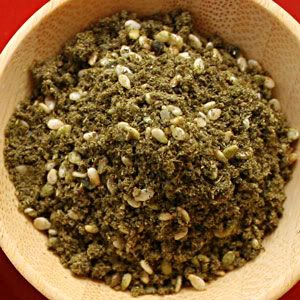
4.) Za'atar ( a seasoning mixture of wild thyme, lemony ground sumac and sesame seeds) is a popular seasoning in Armenia, Iran, Iraq, Israel, Jordan, Lebanon, Libya, Morocco, Palestine, Saudi Arabia,Syria, Tunisia, and Turkey.
 Pita bread with za-atar and olive oil
If you've never tasted za'atar (also spelled za'tar, zatar, zatr, zahatar, satar), prepare to be hooked! The taste of a za'atar mixture can described be tangy, herbal, nutty, or toasty-- actually all of the above!(The word can be used for wild thyme, or for the mixture of thyme, sumac, sesame and salt, by the way.)
You can either spread it on flatbreads or pita with olive oil, or dip the bread in a mixture of olive oil and za'atar. (Use a really good extra virgin olive oil that you enjoy uncooked.) I sprinkle it on top of roasted cauliflower, steamed broccoli and stir-fried Brussels sprouts, some soups (try it on Palestinian Red Lentil Soup , Levantine Bean Soup , Silky Sweet Potato and Red Lentil Soup or Balkh Brown Lentil Soup), on tofu feta and on dips and other vegan cheese preparations. It would be great on grilled or fried tofu, or rubbed into your favorite seitan. Try it in salad dressings and on latkes (potato pancakes) or oven-fried potatoes, sweet potatoes, couscous, grilled zucchini, cucumber salad, tomatoes-- I'm sure you'll come up with many other ways to use it!
There are many, many different versions-- here's a formula to start with. Or you can buy some at Greek or Middle Eastern Markets, or on amazon here and here
 and more.
and here and more.
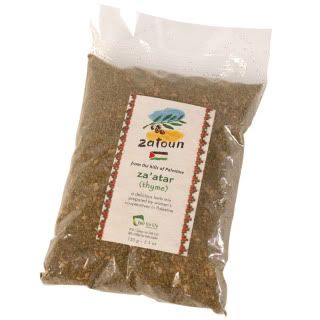
My absolute favorite za'atar is Zatoun fair trade brand, available from Ten Thousand Villages fair trade markets in Canada (you can order online) and here in the USA. The aroma of the wild thyme in this product is so amazing-- it bears no resemblance to the dried thyme we usually have available to use.
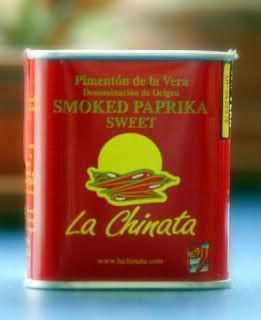
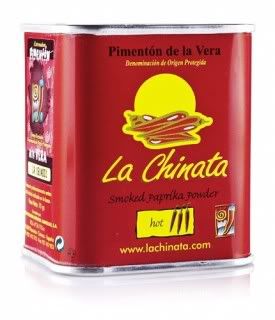
#5) Spanish Smoked Paprika (Pimentón): How did I ever live without this product? I know it's a bit "old hat" now, but I still love it! Smoked paprika is the Spanish cousin to sweet Hungarian paprika . It's made from pimiento peppers that have been dried and smoked over an oak fire, then ground into a fine powder.
. It's made from pimiento peppers that have been dried and smoked over an oak fire, then ground into a fine powder.
It was originally used in paella and in spicy Spanish sausages, but it's delicious sprinkled on soups, salads, dips (such as hummus) vegetables (especially roasted), pizza, potatoes, scrambled tofu, roasted tomatoes, and in stews and BBQ sauces. It's a great spice for adding smoky flavor and depth to vegan dishes, and low-fat dishes.
There are many, many brands available (amazon carries many) and in gourmet food stores and supermarkets.
 and
and kind:
kind:
There is also a moderately spicy smoked paprika (Pimentón Agridulce), but I haven't found it around here. Perhaps I should order the 3-pack from amazon!
from amazon!
Enjoy! (And I look forward to hearing what your favorites are!)


Wednesday, September 6, 2006
AJVAR (VEGETABLE "CAVIAR")

What I made for lunch the other day-- I call them "Mediterranean Quesadillas". I had some grilled eggplant and zucchini, and some wholewheat tortillas, leftover from dinner the night before. I cut one tortilla in half and spread one half with Ajvar
 , a Balkan red pepper and eggplant spread (see more about this and a recipe below), and the other half with vegan mayonnaise (my low-fat version). Then I added the grilled veggies, plus roasted green peppers (you could use red ones) thin slices of smoked tofu
 , and fresh basil leaves.
I put it together and cooked over medium heat in a nonstick pan
 until golden and crispy on both sides. Cut into wedges with a sharp knife
 . This will serve 1-2, depending on appetite. Have napkins handy!
ABOUT AJVAR
 (pronounced Eye-vahr):
 This delicious condiment is originally from Macedonia, Croatia, and Serbia, but is popular also in Albania, Greece, Bulgaria, Hungary, Turkey, etc., and all over the Middle East now, it seems. It is sometimes called "vegetable caviar", and there is hot ajvar
and mild ajvar. In some areas they use roasted green peppers.Commercial versions are inexpensive in Middle Eastern stores and many brands are available from amazon.com. Trader Joe's sells it but they don't call it ajvar on the label. They call it Trader Joe's Red Pepper Spread with Eggplant and Garlic. I understand that Whole Foods sells an organic version with "Ajvar" on the label.

USES FOR AJVAR:
I use it on all kinds of wraps, panini, and sandwiches:


It also makes a great cracker spread or a dip. Serve it as an appetizer to spread on thick slices of country-style bread or flatbread such as pita or lavosh, or use it as a side dish. Or just use it like salsa. You can use it 0nrice or potatoes, or as a quick pasta sauce; or mix it in with hummous and other dips. It's used on grilled meats, so why not on grilled seitan or tofu? Or on some big Tofurkey or Field Roast veggie sausages? Or how about with white beans, veggie "meatloaf", "cheese" toast, or bruschetta? Spice Island Vegan used it with my tofu fritatta from "Nonna's Italian Kitchen
" and it would be good on scrambled tofu, or vegan omelets, too .Many Balkan families can their own supplies of it every year, but I can't find anything specific about canning it. I read that green beans and unripe tomatoes are sometimes mixed in with the ajvar before canning. All the canning sites I consulted warn against canning any pureed vegetables because of the problem of getting the temperature up high enough in the center of a jar of pureed food without commercial equipment. Perhaps if you made it very chunky you could pressure can it in small jars (1/2 pint) and then puree it after opening. I did read that you can freeze it, too.
HERE'S MY RECIPE:
Printable Recipe
BRYANNA’S AJVAR (BALKAN “SALSA”)
Makes 3 1/2 cups
Pronounced Eye-vahr, this is a name of Turkish origin given to a popular Balkan spread or relish made of roasted peppers and eggplant (and sometimes other vegetables, too). Fresh ajvar is always made during the late summer and early autumn, just after the pepper harvest, when many Balkan households also can or bottle their own ajvar for use throughout the year. You can make it as mild or spicy as you like!
I can get this in my area in jars, fairly cheaply (about $4.00 Cnd a jar), but I like the idea of doing my own seasoning, and it’s very easy to make!
NOTE: My husband didn’t care for the what-I-would-call-“silky” texture of this ajvar, but then, he doesn’t really like eggplant. I have noted below that you can use more pepper and less eggplant if you like, but see also the zucchini variation below, which he preferred.
3 medium red bell peppers
(NOTE: If you prefer a chunkier texture and redder color, use another pepper and a smaller eggplant)
OPTIONAL: 1 large mildly hot pepper (such as a Hungarian yellow banana pepper)
(NOTE: use more hot peppers instead of adding hot sauce, if you prefer)
1 medium eggplant
2 cloves garlic, peeled and chopped
1 tsp. salt
1/4 c. extra-virgin olive oil
3 T. red wine vinegar
juice of one medium lemon
1/2 tsp. liquid red hot sauce, or more to taste
freshly-ground black pepper to taste
Preheat oven to 425 degrees F. Place the peppers on a baking sheet and the eggplant on another. Poke the vegetables in a few places with a large fork. Roast the vegetables until they are somewhat charred on the outside and soft inside—the peppers will, of course, soften faster than the eggplant. Place the veggies inside a closed paper bag for 10 minutes or so— this will help loosen the skins.
This is a messy job, but quick—the skins should just peel away—it’s okay if a bit of pepper skin gets left behind. Remove the stems, and the seeds of the peppers. Rinse the peppers. Chop everything coarsely and then pulse in a food processor to the texture you like. Set aside.
On a small plate, mash the garlic with the salt with the back of a spoon til it is paste-like. In a large skillet, heat the oil a bit, then add the veggies, the salt and garlic, vinegar, lemon juice, hot sauce and fresh pepper to taste. Simmer the mixture until it has thickened a bit (it will thicken in the jar, too, so don’t cook it down too much). Taste for salt, pepper and hot sauce.
If serving immediately, serve it in a bowl drizzled with olive oil, or pack into 2 sterilized pint jars, drizzle a bit of olive oil on top, seal and refrigerate— it will keep for several weeks, although you’ll probably find many uses for it! (i have read that you can freeze it, too, but have not tried that myself.)
ZUCCHINI AJVAR: Omit the eggplant and use a chunk of large zucchini (this is a good way to use those overgrown ones!) about the size of a medium eggplant. (NOTE: you can use 4 red peppers and a slightly smaller chunk of zucchini if you prefer—it will be redder in color that way.) Otherwise, proceed as for the recipe above. I found that it needed about 1/2 tsp. more salt when using the zucchini, for some reason.
Enjoy!

BRYANNA’S AJVAR (BALKAN “SALSA”)
Makes 3 1/2 cups
Pronounced Eye-vahr, this is a name of Turkish origin given to a popular Balkan spread or relish made of roasted peppers and eggplant (and sometimes other vegetables, too). Fresh ajvar is always made during the late summer and early autumn, just after the pepper harvest, when many Balkan households also can or bottle their own ajvar for use throughout the year. You can make it as mild or spicy as you like!
I can get this in my area in jars, fairly cheaply (about $4.00 Cnd a jar), but I like the idea of doing my own seasoning, and it’s very easy to make!
NOTE: My husband didn’t care for the what-I-would-call-“silky” texture of this ajvar, but then, he doesn’t really like eggplant. I have noted below that you can use more pepper and less eggplant if you like, but see also the zucchini variation below, which he preferred.
3 medium red bell peppers
(NOTE: If you prefer a chunkier texture and redder color, use another pepper and a smaller eggplant)
OPTIONAL: 1 large mildly hot pepper (such as a Hungarian yellow banana pepper)
(NOTE: use more hot peppers instead of adding hot sauce, if you prefer)
1 medium eggplant
2 cloves garlic, peeled and chopped
1 tsp. salt
1/4 c. extra-virgin olive oil
3 T. red wine vinegar
juice of one medium lemon
1/2 tsp. liquid red hot sauce, or more to taste
freshly-ground black pepper to taste
Preheat oven to 425 degrees F. Place the peppers on a baking sheet
and the eggplant on another. Poke the vegetables in a few places with a large fork. Roast the vegetables until they are somewhat charred on the outside and soft inside—the peppers will, of course, soften faster than the eggplant. Place the veggies inside a closed paper bag for 10 minutes or so— this will help loosen the skins.This is a messy job, but quick—the skins should just peel away—it’s okay if a bit of pepper skin gets left behind. Remove the stems, and the seeds of the peppers. Rinse the peppers. Chop everything coarsely and then pulse in a food processor to the texture you like. Set aside.
On a small plate, mash the garlic with the salt with the back of a spoon til it is paste-like. In a large skillet, heat the oil a bit, then add the veggies, the salt and garlic, vinegar, lemon juice, hot sauce and fresh pepper to taste. Simmer the mixture until it has thickened a bit (it will thicken in the jar, too, so don’t cook it down too much). Taste for salt, pepper and hot sauce.
If serving immediately, serve it in a bowl drizzled with olive oil, or pack into 2 sterilized pint jars, drizzle a bit of olive oil on top, seal and refrigerate— it will keep for several weeks, although you’ll probably find many uses for it! (i have read that you can freeze it, too, but have not tried that myself.)
ZUCCHINI AJVAR: Omit the eggplant and use a chunk of large zucchini (this is a good way to use those overgrown ones!) about the size of a medium eggplant. (NOTE: you can use 4 red peppers and a slightly smaller chunk of zucchini if you prefer—it will be redder in color that way.) Otherwise, proceed as for the recipe above. I found that it needed about 1/2 tsp. more salt when using the zucchini, for some reason.
Enjoy!
Subscribe to:
Comments (Atom)