Showing posts with label beancurd skin. Show all posts
Showing posts with label beancurd skin. Show all posts
Monday, June 13, 2011
A PERUVIAN STEW MADE WITH YUBA: ITALO-PERUVIAN CAU-CAU

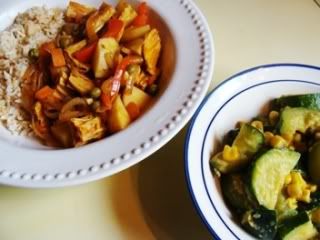
I know-- I'm giving you a second yuba stew very soon after the first one! (Read about yuba at this post, if you have no idea what I'm talking about!) I think you'll forgive me when you taste it! (And it's even better the second day!) I'm on a bit of a yuba kick right now and I had a package left, and a yen to mess with a Peruvian recipe I've been developing (and veganizing) for a few years. (My father was Peruvian, Peruvian cuisine is very unique and delicious, and I have a long list of Peruvian recipes to veganize!)
The original is a Peruvian stew, served with rice, called Cau-Cau, usually made from tripe (sometimes seafood). What is called the Creole version is simply tripe, sauteed onions, boiled potatoes, hot yellow peppers, turmeric, salt and pepper, and mint. The Italian-Peruvian version is a bit more elaborate and appealed to me more (plus, my Peruvian grandmother was of Italian descent). It contains some tomato, mushrooms, wine or Pisco (Peruvian grape brandy), and, typically Peruvian, fried potatoes added at the end of cooking! (Peruvians often combine potatoes and rice in one meal-- the potatoes are indigenous; the rice was brought by the Spanish and is now ubiquitous. With a Peruvian father, we had rice at almost every dinner when I was growing up.) I digress...
Why use yuba instead of the tripe (I won't go into what it actually is-- you can look it up!)? I've never actually tasted tripe, despite growing up with Peruvians and Italians around and eating meat for most of my life (been a vegan for about 22 yrs now). Every country seems to have at least one tripe recipe that seems to be a cultural comfort food (such as the Mexican soup, Menudo). Tripe is described as chewy and mild or subtle in flavor-- and that is how I would describe yuba! Typically, tripe stews and soups around the world are spicy and flavorful, so why not use yuba instead and enjoy some old-world cooking?
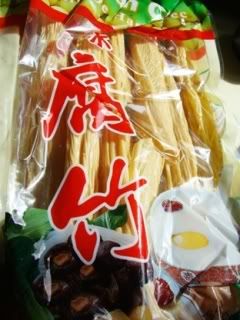 A package of yuba (bean-curd skin) sticks
I first thought of this when I was working on my Chinese vegan cookbook
 and veganized a traditional tripe recipe with a delicious sauce. Ever since, I have been on the lookout for traditional recipes to further utilize yuba, which is a favorite food of mine. I hope you will try and enjoy this one!
A thought: In some cultures, a related product called chitterlings (or chitlins) is used in traditional "comfort foods". I have never tasted them either, but have read that they have a similar taste and texture to tripe, so maybe yuba could be used in some of those traditional recipes, too?
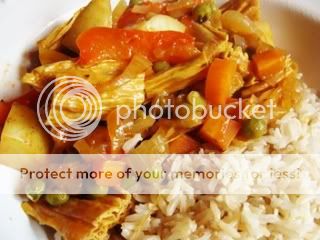
BRYANNA’S VEGAN ITALO-PERUVIAN CAU-CAU (A STEW)
Serves 6
Serve this spicy stew with steamed brown basmati rice. This dish is even better reheated the next day! NOTE: Often, fried potatoes are added to this stew, but I opted for cubes of raw potato cooked in the stew, similar to the Creole version (see text above). (See the link in the ingredient list below for where to buy yuba sticks online, or try an Asian grocery store. Read the yuba info at the 2nd link below for how to ask for it in a Chinese market.)
7 oz. package of yuba (Chinese bean curd skin) sticks (see info about yuba here)
juice of 1 lemon
2 T. olive oil
2 large onions, thinly sliced
3 large cloves of garlic, crushed
1 red bell pepper, seeded and thinly sliced
1 medium carrot, peeled and diced small
1 1/2 c. water
2 medium Yukon Gold potatoes, scrubbed and cut into 1/2” cubes
1 c. frozen peas
1/2 c. dry white wine (or dry white vermouth)
1/3 c. tomato paste (1/2 small can)
1-2 T. aji amarillo paste (Peruvian hot yellow chile paste) or Sriracha sauce

(Peruvian hot yellow chile paste) or Sriracha sauce
1 large bay leaf
2 teaspoons vegan bouillon powder  or paste
 , or enough cubes
 for 2 cups broth
or paste, or enough cubes for 2 cups broth
1/2 T. dried mint (or 2 T. chopped fresh)
1 tsp. salt
1/2 ounce dried porcini mushrooms , soaked for 1/2 an hour in boiling water (use mushrooms and strained soaking water in stew)
OR use 1 tsp. dried porcini mushroom powder
1/2 tsp. ground cumin
1/2 tsp. dried oregano
1/4 tsp. tumeric
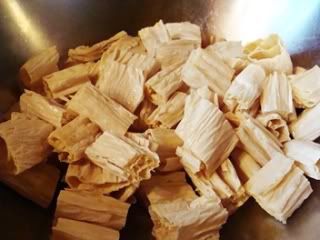
Soak the yuba in a large bowl of hot water for about 2 hours. Drain the yuba, squeeze gently to remove as much water as possible, and cut the yuba into 1” pieces. Mix them in a bowl with the lemon juice. Set aside.
Heat the oil in a large pot. Add the onions and stir-fry over medium-high heat until the onions are softened and slightly browned. Add the garlic, carrot and bell pepper. Stir fry until the pepper softens a bit.
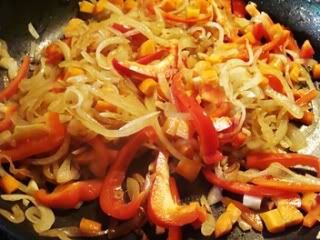
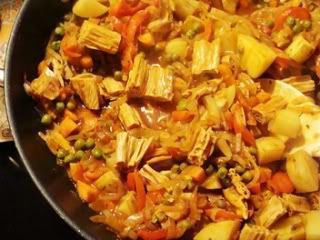
Add the remaining ingredients, including the yuba. Bring to a boil, then lower the heat. Cover and simmer for about 30 minutes.
Add the remaining ingredients, including the yuba. Bring to a boil, then lower the heat. Cover and simmer for about 30 minutes.
Nutrition Facts
Nutrition (per serving): 311.9 calories; 35% calories from fat; 12.9g total fat; 0.0mg cholesterol; 541.6mg sodium; 662.2mg potassium; 28.8g carbohydrates; 4.9g fiber; 11.2g sugar; 23.8g net carbs; 21.6g protein; 6.5 points.
Enjoy!



Friday, July 28, 2006
BUDDHA'S "ROAST DUCK" WITH YUBA

Yesterday I made a recipe from my Chinese cookbook, "Authentic Chinese Cuisine for the Contemporary Kitchen
 "-- Buddha's "Roast Duck", a variation of my Buddha's "Chicken" recipe. I'd almost forgotten how easy it is to make, and how delicious. It makes a lovely appetizer and was gobbled up in no time. I served it with some homemade organic Chinese plum sauce I made last year, but you can use the more traditional "Duck Sauce" (see recipe at end of this blog entry).
This is NOT a Weight Watcher's Core Food Plan recipe! It's fried, to begin with, (I shallow-fried it in a skillet instead of the traditional deep-frying) and yuba (Don't know what yuba is? See about yuba below) is quite rich. This was for company. This time I had no fresh yuba, so I used dried yuba sheets, soaked, which works just fine.
Printable Recipe
BRYANNA'S RECIPE FOR BUDDHA'S "ROAST DUCK"
Serves 4
This is a traditional yuba, or beancurd skin, recipe used by Chinese Buddhist vegetarians. It makes a delicious hot or cold appetizer. Leftovers can be chopped and used in stuffings or rice or noodle dishes.
If you use fresh yuba, which needs no soaking, this dish is very quick to prepare. It's very easy to make, though, whether you use fresh or dried.
3 large (about 16" in diameter) round sheets fresh yuba (beancurd skin), cut in half
OR 3 large rectangular sheets dried yuba (beancurd skin)
1/3 c. mushroom bouillon, or the water from soaking dried mushrooms

2 T. soy sauce
2 T. dry sherry
3/4 tsp. organic suga
 r
2 tsp. dark (Asian) sesame oil

oil for shallow-frying (cold-pressed Chinese peanut oil, such as Lion&Globe Brand, is good, or you can use canola oil)
If using the dried yuba, soak the sheets (handle carefully) in warm water for 5-10 minutes, then pat them dry and cut them in half.
Mix the broth, soy sauce, sherry, sugar, and sesame oil in a small saucepan and heat until the sugar is dissolved. Pour this into a bowl and allow to cool slightly.
Spread a piece of fine cheesecloth or thin white cotton sheeting, about 12x6", over a cookie sheet. Place one half-sheet fresh or reconstituted dried yuba on this.
Brush the sheet with the soy sauce mixture. Cover with another piece of yuba and brush-- repeat until all of the yuba and sauce is used up. If there is some sauce left, pour it over the yuba and brush evenly towards the outsides.
Fold the short side in, once, and then once again, so that it is folded in thirds, and flatten lightly. I had to fold it over in half to make it fit into my steamer and skillet. Wrap it in the cloth. Tie the ends with white string. Steam the roll, covered, on a steaming try with holes over boiling water, for 10 minutes.
Remove the cloth carefully and cut the roll into 2 sections, if it seems to big to handle. Heat oil about 1/4-1/2" deep over high heat in a large, heavy skillet. When the oil is hot, but not smoking, carefully add the "package"(s), standing back to avoid splattering, and fry until golden-brown. This will take only a few seconds.

Turn over and fry the other side. It will probably puff up. Remove from the pan (you may have to use cooking tongs.

Drain the yuba on paper.
To serve, slice diagonally into thin slices on a cutting board with a sharp knife, and serve hot or cold as an appetizer.
To make MOCK PEKING DUCK, serve thinly sliced Buddha's Roast Duck with Manadarin pancakes or flour tortillas, and finely-shredded green onion. Guests place a bit of "duck" along with about 1 tsp. of "Duck Sauce" sauce (below)and a few shreds of green onion in a Mandarin pancake, roll up, and eat out of hand.
BRYANNA'S DUCK SAUCE
Makes about 7/8 c.
Although many recipes for "Duck sauce" call for plum sauce or hoisin sauce, the traditional sauce in China is made with brown or yellow bean paste. Serve this with Buddha's "Roast Duck".
1/2 c. water
4 T. brown bean sauce (OR use slightly watered down miso)

4 T. organic sugar
2 T. dark (Asian) sesame oil

Mix the ingredients in a small saucepan. Stir over high heat until the sugar is dissolved and the mixture has thickened to your liking. Chill the mixture before serving.

YUBA OR BEANCURD SKIN ("TOFU SKIN", BEANTHREAD SKIN", TOU-P'I, DOUFU-P'I OR DOUFU-I) is considered a delicacy Japan, but is a much more common food in China and Taiwan, where each city will have a number of shops or market stalls selling only beancurd skin and products made from it. It is made by simmering soymilk and lifting off the "skin" that forms on the top, just like that on dairy milk. It's very rich and nutritious, and high in protein.
Here is a history of yuba.
Here is how to make your own yuba!
This "skin" can be used fresh, or is dried in sheets or rolled-up "sticks". The sticks are used in soups, stews, and stir-fries, and can also be barbecued. The sheets can be cut up like "noodles", or used in soups, stews, and stir-fries as well. They can be rolled around fillings and baked, steamed or fried for delicious appetizers, or used as a crispy "skin" around vegetarian poultry substitutes.

Dried Yuba
Yuba (I'm going to refer to this product by its Japanese name because it is shorter, becoming more universally accepted [like tofu instead of bean curd], and less confusing than the various English translations from the Chinese names) is a very concentrated soyfood. The dried version, more widely available in Asian markets and some large supermarkets, must be soaked in warm water for about 10 minutes before using.


Fresh sheets are also available in large cities in Chinese tofu shops, and must be frozen for future use. They often come in 16"-diameter round sheets, or semi-circular sheets. These are sometimes labelled "Fresh Spring Roll Skins or Wrappers", but are not to be confused with the wrappers made from flour. The package will tell you that the ingredients are only soybeans and water. Some varieties are very thin, some are as thick as canvas. The sheets are folded into many forms and sizes to make rolls and stuffed pouches, or molded and steamed.
The Chinese have used amazing ingenuity to create "mock meats" using yuba. In Chinese yuba shops you will find replicas of chickens, ducks, fish, hams, rolled meats, sausages links, etc., all made primarily from yuba. These dishes, with names such as Buddha's Chicken or Buddha's Duck, as served on cold plates at fine restaurants or family banquets.
Often, these "mock meats" are made from a similar product called pai-yeh, or pressed beancurd sheets or wrappers, sometimes translated as "one hundred leaves" or "one hundred pages". These are used in the same ways as yuba, but are made by pressing firm soybean curds under very heavy weights for several hours, until the sheet of beancurd looks like a 6-12" square of canvas with a clothlike pattern imprinted on both sides. The sheets are flexible and very attractive, I think. They are, unfortunately, harder to find outside of urban centers with large Chinese populations, so I have not called for this product in this book. However, should you find it, feel free to substitute it for yuba.
A thicker form of yuba is called Er-ju bean curd sheets. They are brown and come in stacks of 5 x 1 and 1/2" sheets tied together with string or wrapped in paper. They can be soaked and then cooked with soy sauce and seasonings to make a type of "ham" or "bacon".
Enjoy!

Subscribe to:
Posts (Atom)